Welcome to this third and final part of the special feature on triggers. In this section, we aim to highlight some specialist after-market trigger components which can be added to a variety of guns. Then we conclude with some shooting techniques to assist with putting it all into practise.
After-Market Mods
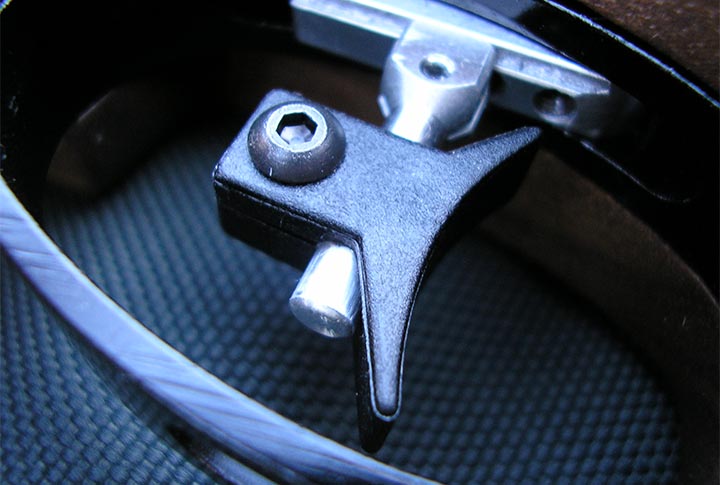
Sometimes making small subtle changes to a particular gun, can make a big difference, and with that in mind, several companies have emerged that either manufacture or supply custom trigger parts; often made to fit popular models of airgun. Individual trigger shoes, and adjustable shoe and rod assemblies can all be purchased and fitted to replace original factory components, and this can be surprisingly effective for many enthusiasts.
Again, what appeals to one shooter, may not suit another, which is where the idea of customization can come into play. A popular model can be given a new lease of life with upgrades in this way, which can be a cheaper option than trading in the gun too early.
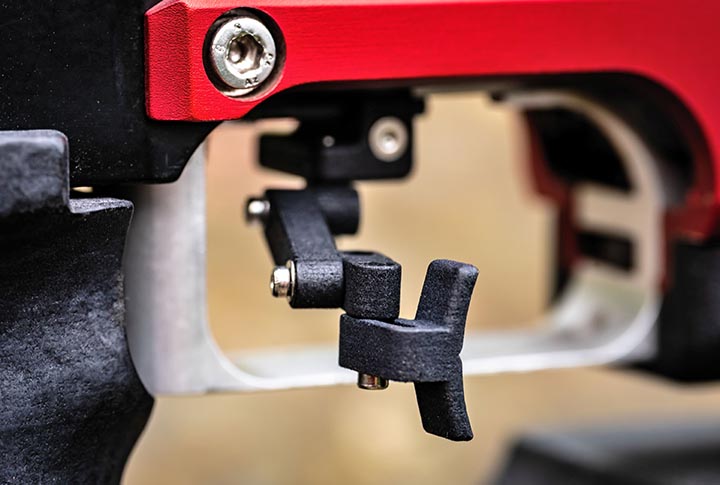
Maestro design, was set up by accomplished Hungarian Field Target shooter, Andras Fekete Moro, and one glance at his website reveals a whole world of 3-D printed airgun accessories; and among these are several intriguing custom trigger assemblies. Formed from laser sintered nylon, his designs can offer a trigger blade, allowing for a significantly offset finger position. It’s effectively an articulated trigger blade formed from small sections. Add more sections and the angle can be tweaked to suit, allowing the blade to sit off to the left or right. Intended for an ultra light PCP match trigger, it’s all quite ingenious and allows the serious shooter to totally adapt the gun to fit.
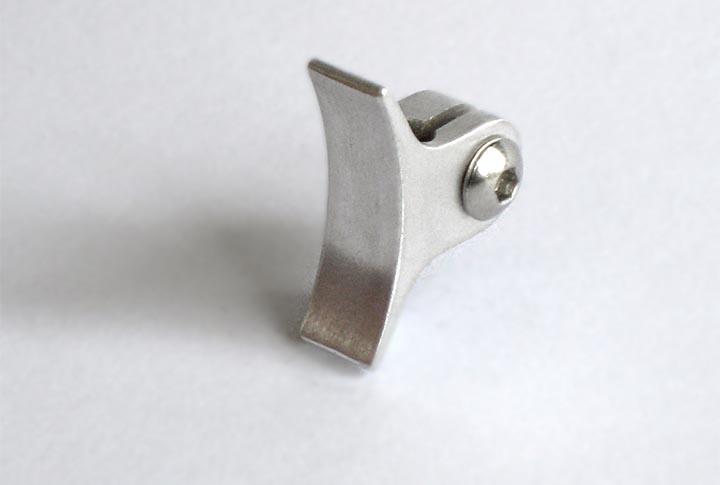
Rowan Engineering are another better known specialist outfit, and they produce a whole range of custom adjustable trigger blades and rods, to fit many of the more popular airgun models. Again, the all important caveat applies- be sure of the fitting process before attempting the job, or get someone qualified involved.
Rowan Engineering www.rowanengineering.com
Maestro Design www.maestro-design.co.uk
Trigger Technique & Approach
And so to trigger technique itself, and here, we’re aiming for a smooth precise shot release. The following lays out a basic thought process, which ideally needs to become second nature.
1 – Good practise dictates that we ensure that the trigger finger is kept completely away from the blade until the gun is nicely on target, and the shot is near to being taken. Keep the finger just on the side of the stock or just wrapped around the pistol grip until the shot readies itself. This keeps everything safe, and also prevents the shot from being tripped prematurely.
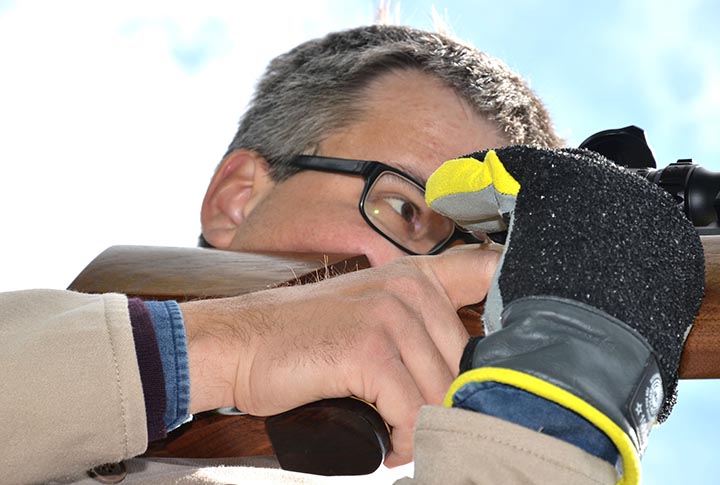
2 – It’s imperative that the trigger finger is able to move independently from the rest of the hand, without hindrance, and this keeps it relaxed and free. Be aware of over-restrictive gloves too, which may affect sensitivity. Indeed, if weather dictates gloves be worn, then opt for the ones with exposed fingertips- allowing for full contact with the trigger blade.
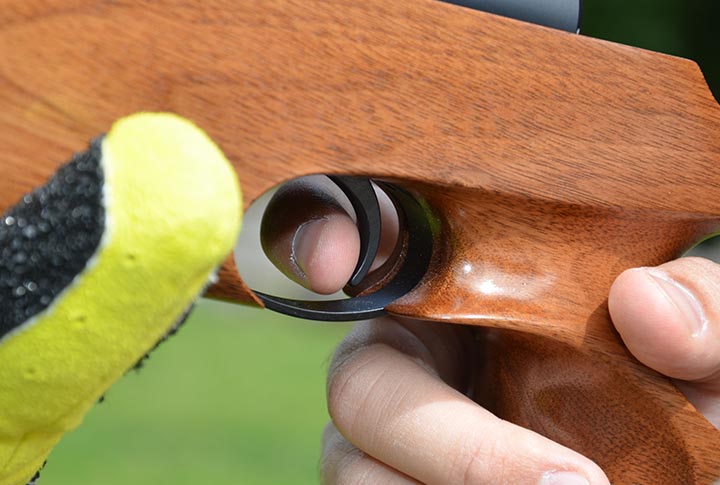
3 – Full trigger control is achieved when the correct part of the index finger is used, and this means the trigger blade should sit across the middle of the first pad of the index finger, again allowing for full sensitivity.
4 – The blade needs to be free from friction within the trigger guard, and then the trigger should be pulled straight back ideally. Custom trigger blades off-set or twisted to the left or right, can work well with a super light match unit, but a twisted blade can cause a distorted pull if the mechanism requires a heavy pull.
5 – A key rule of any trigger release is to gently SQUEEZE the shot. This will minimize any movement transferred to the rifle. Therefore, never snatch the blade!
6 – And so we return to ‘Follow Through’ – so often a vital factor where successful airgun shooting is concerned. Remember that comparatively slow lock-time, compared to live disciplines, and the guidance is simple – take the shot and stay in the aim for a couple of seconds afterwards; minimizing the chance of pulling off the shot.
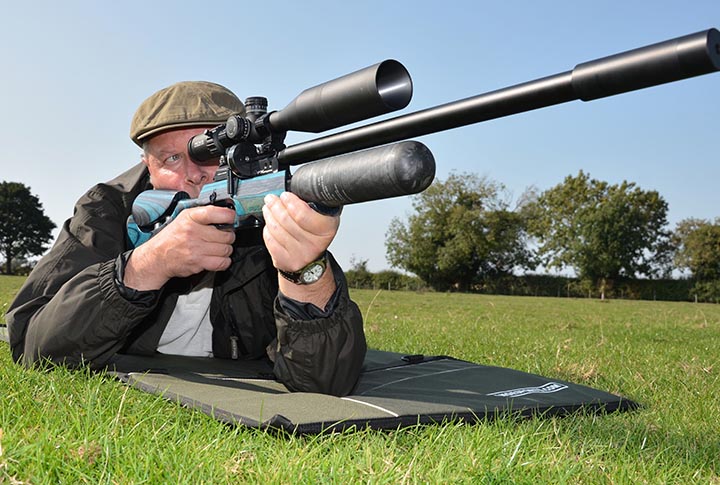
All good practise, but it’s this type of attention to detail which can make all the difference.
Range & Country