Last time out we covered shooting from the prone position, so in this blog, it’s time to focus on what’s termed ‘discipline shots’ – compulsory kneeling or standing shots.
Deciders
Attend any Field Target or Hunter Field Target event, and with the high standard of shooting on the day, it soon becomes clear that results are won and lost on who hits those discipline shots.
So for those that are ultra competitive, it’s pointless continuously turning up to the club, shooting from a rest or even from the prone position, as come the next competition day, that solitary stander or kneeler half way up a hill, in a swirling breeze, will simply instil fear and negativity.
The answer is to practise these extra challenging shots on a regular basis, and after a period of time, forcing the correct muscles to work, we should find muscle memory kicks in.
By pushing ourselves to improve, with this focussed preparation, it could well pay dividends in the long run; giving us our best chance of hopefully breaking into the prizes.
Kneeling Shots
If we consider a standard HFT course, this consists of 30 knock down targets, 6 of which will be discipline shots; 3 kneelers and 3 standers. Two of each will be supported, so the shooter has a tree or object to lean on, whilst the other will be designated unsupported, the hardest of the lot.
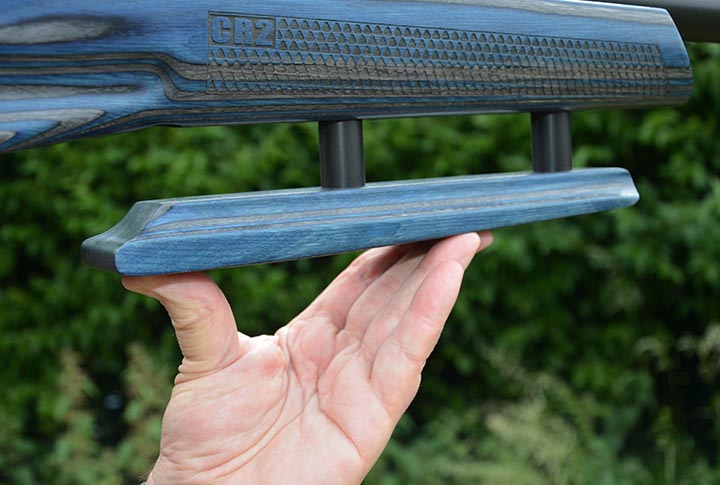
Adopting a kneeling position obviously introduces a level of instability, so this is where technique comes into play.
The United Kingdom Air Rifle Hunter Field Target (UKAHFT) official rules state that kneeling is defined as the body ‘having three points of contact with the ground, the leading foot, the bent supporting knee, and the back foot, which should be raised with toes on the ground, with the shooter sitting on the heel, rather than the foot flat on the floor’.
As shooters have pushed the rules, the organisers now allow the back foot to be straight out flat, but what they do outlaw is sitting on a flat turned foot.
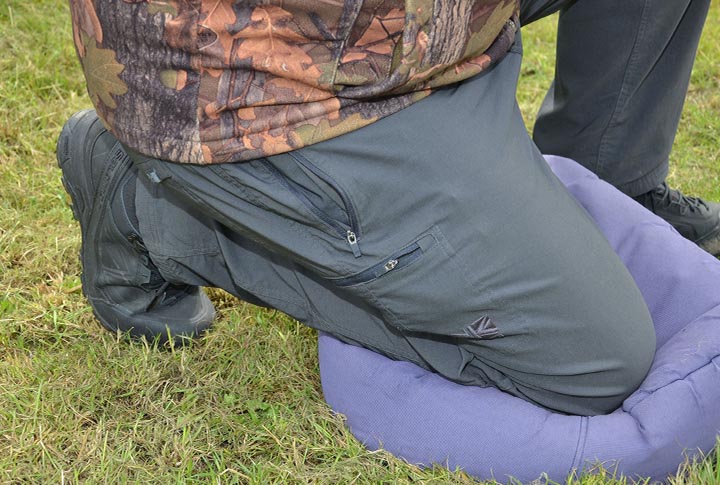
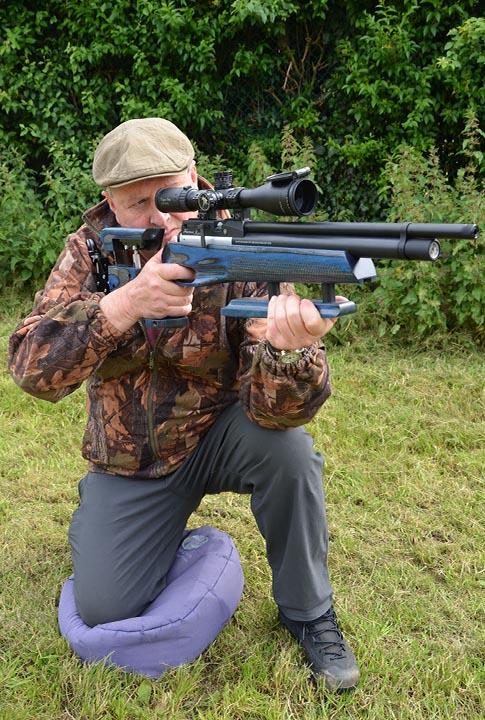
A classic kneeling stance sees the front elbow placed into the small recess in the front knee, and keep that supporting leg at a right angle, which transfers much of the weight of the gun down into the floor. If this doesn’t feel right, then try something more comfortable, rather than force it.
Personal body shape largely dictates what is and is not possible, and listening to our body is important!
The rules also state that the wrist of the leading support hand, needs to be forward of the leading knee, so the hand cannot be on the knee in other words. Again, rules have been diluted over time, like any sport, so it’s not cheating to use those rules to our advantage.
Standing Shots
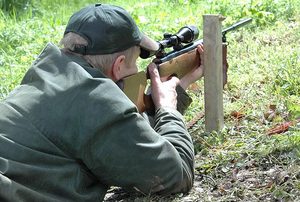
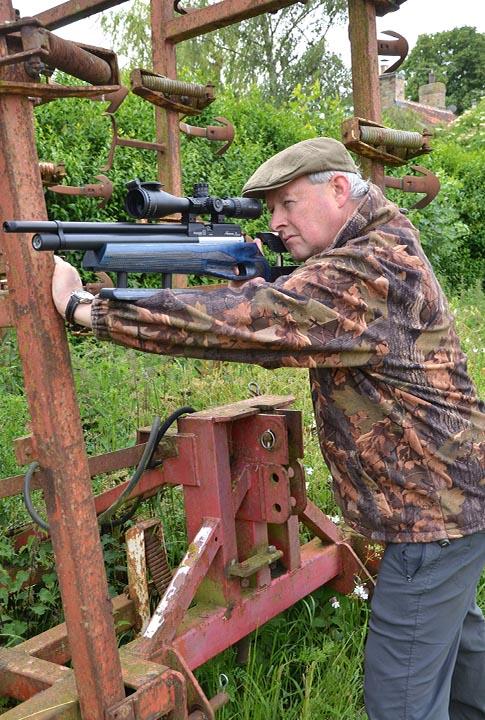
As mentioned, two of the standing shots on an HFT course will allow support from an object, normally a tree, and here it’s advisable to stand with the legs at an angle to the tree or support, so your weight transfers into the object, aiding stability. The unsupported stander is of course the hardest shot of all, but regular practise can dramatically up our chances. That classic saying, ‘ the more I practise, the luckier I get’ really is true in this respect.
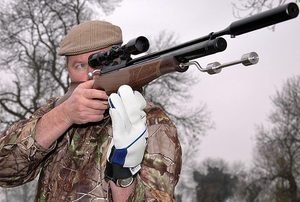
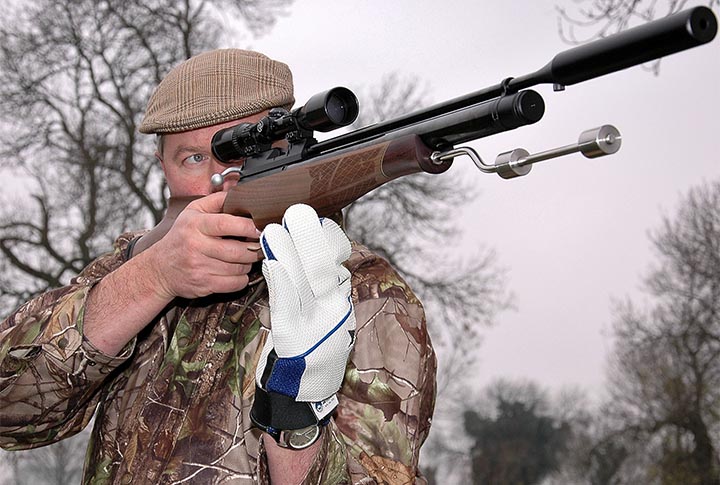
Much can be learned from watching Olympic indoor shooters, and the classic target stance works well on flat ground. For this, stand sideways to the target, with the legs apart, about as wide as the distance between the shoulders. Push the front facing hip forwards, whilst placing the elbow of the supporting arm tightly in against the hip. This position transfers much of the weight of the rifle into the body. The leading arm creates the support under the forend, and here, there are many variations to evaluate. Experiment by shaping a fist to support the gun just in front of the trigger.
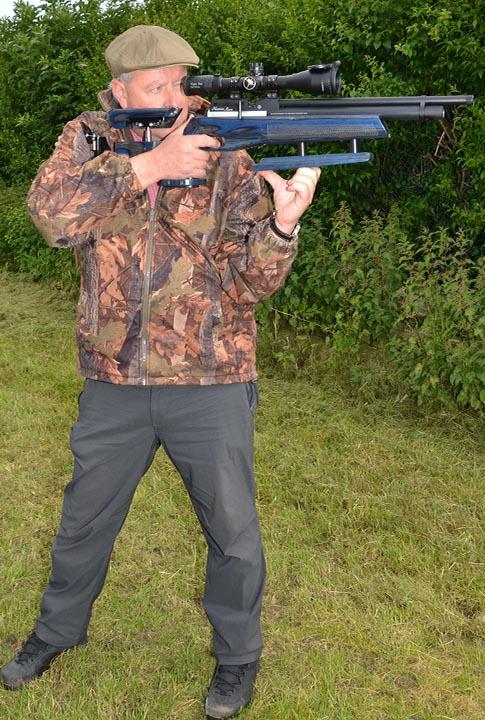
Alternatively, use raised fingers for elevation, or a twisted support hand. A target glove will add the necessary strength to the fingers, and just see what feels best in the aim. Once muscles begin to work, it can all fall into place.
Just be aware though, that if a target is elevated above 30-40 degrees say, sometimes having the guts to simply adopt a freehand shot hunter style, with no supporting arm, can pay dividends.
Out Of The Blue
Practise standing shots at the club, and after a good session, the right muscles start to work, and it can all bed in nicely. The challenge is being able to come up with with the goods, against that dreaded standing shot, hidden in a target course among a stream of prone targets; effectively with no warm up, and that’s where the top shots earn their moment of glory.
At the end of the day, it comes down to how much we want success, and for that, it’s worth putting in the effort. As is so often the case though, any focus on improving our positional shooting is not just relevant for competitions, but also transferable to live quarry shooting.
Above all though, enjoy the challenge and what our great shooting sport has to offer.
Range & Country