Trigger Blade Shape
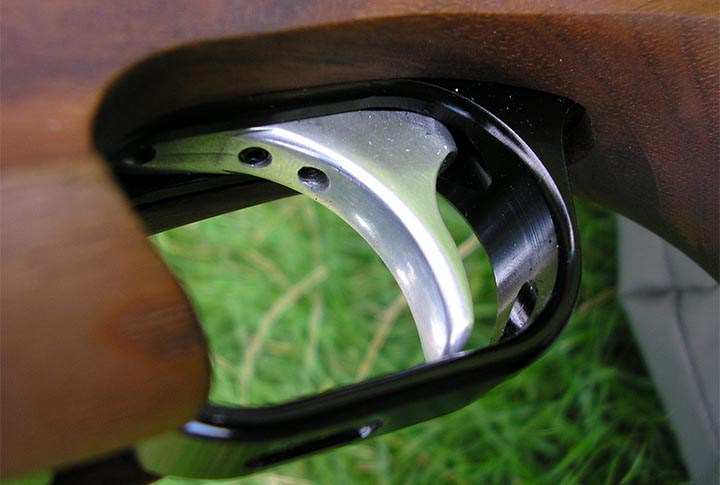
As with every aspect of an airgun, what feels right for one shooter, may be a source of irritation for another, and trigger shape is one such detail up for debate. Traditionally, hunting rifles have been fitted with a curved blade, but why several manufacturers persist in fitting narrow blades to some of the cheaper budget rifles, remains a mystery. Add in a heavy pull weight, and it’s not the most efficient setup.
A wide blade is the answer, since it spreads the load on the finger, and can compensate to some degree for a poor mechanism.
Match rifles such as the Steyr Challenge, come with a fully adjustable trigger piece which sits over the usual support rod, and can be adjusted and twisted, in all directions. Straight flat blades are the trend here, although Air Arms have adopted the small ridged button design with their top flight XTI50.
In either case, the ultra sophisticated mechanism allows for a super light release. Couple this with the wide blade allowing for even spread of pressure, and we are talking ultra refinement.
Two-stage or single stage?
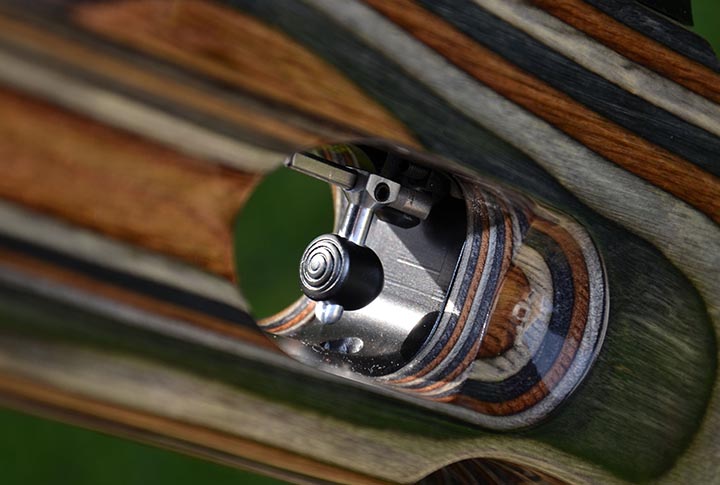
A ‘single stage’ trigger is one where the blade doesn’t move until the shot is released. These will normally have a heavier pull in order to be safe. Whilst normally simple in design, they can be acceptable, especially in the case of the classic BSA Airsporter, where the blade was beautifully shaped and very broad.
However, in today’s market, most triggers are specified as two-stage, and this has to be seen as an advancement. With a two-stage trigger, the blade moves initially through a small arc (the first stage), then hits a stop and at this point increased pressure applied, releases the shot.
Many designs, especially on cheaper airguns, are in effect pseudo two-stage, where the first stage is just free movement, then the second stage is one long creepy movement before firing. Trigger creep is the term used where the contact points of the sears slowly drag across each other, until the shot releases.
This type of trigger can still be acceptable, but the answer is to gently pull through the creep, then sit at the point of release just increasing pressure when ready for the shot. Familiarity with a particular gun is key here, and perseverance and practise are the name of the game.

By comparison, with a genuine two stage trigger mechanism, (such as the acclaimed Air Arms S400/ S500 unit) the sears actually start to move apart as the first stage movement takes place, then the sears break apart as the second stage release point is reached. These far more sophisticated units can then be set to release at exactly the desired point.
Adjustment
With the final release weight, again it can be a matter of personal taste. Many match trigger units are adjustable for blade position, 1st stage pull, 2nd stage pull, length of 1st stage, and even point of over-travel. A word of warning here though, as when making adjustments, it’s vital that the gun’s trigger mechanism remains safe, and hasn’t become so light that it can accidentally discharge. The answer is to only make adjustments if you feel competent enough. Otherwise, leave the job to someone experienced in this field.
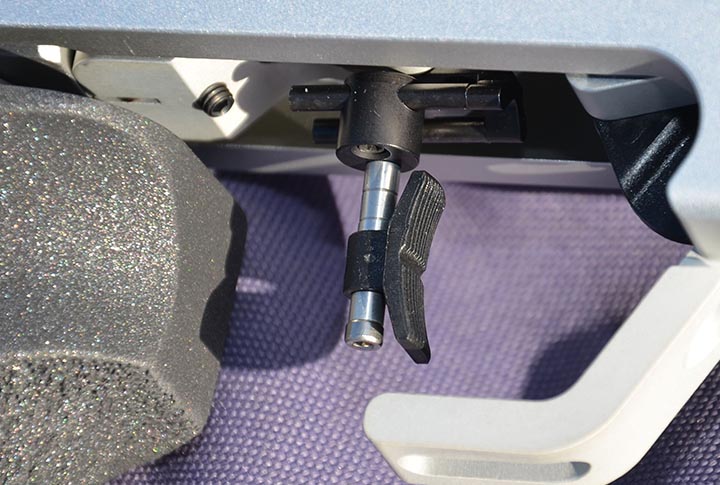
Confident DIY enthusiasts may opt to polish the trigger sears and contact surfaces, and when this is completed, the benefits can be significant. Judicious attention in this area can result in the mechanism tripping far more cleanly and predictably. Removing burrs from the manufacturing process, can make everything smoother in operation, but again, amateur intervention can also cause problems. Manufacturers will sometimes harden the contact surfaces of the trigger sears, which is done to maintain consistent performance, minimizing wear on components. However, DIY intervention here can inadvertently remove the hardened layer, undermining the integrity of the metal. So something to be mindful of.
Electronic Triggers
Electronic triggers are a fascinating area, and these utilize a solenoid in the process. The trigger blade is pulled back, often with very little movement, as it only relies on an electrical contact for the mechanism to release the shot. Various manufacturers have dabbled in this area, but it has been Daystate, (undisputed pioneers of the modern pneumatic era) that have led the way in recent years.
Daystate’s acclaimed MCT and AVT electronic systems offering full electronic power delivery, along with their perfected electronic trigger, have been amazing achievements. But despite some punchy advertizing, do electronic systems dominate the market, and are they the ultimate route to precision shooting?
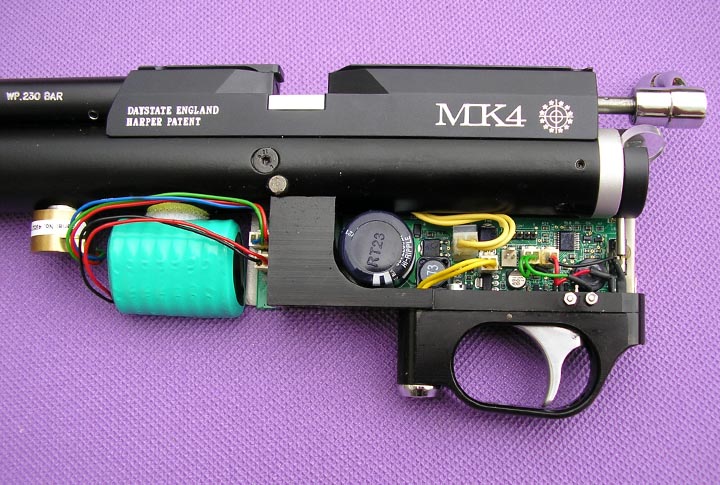
The short answer is no, since many purely mechanical designs still regularly compete at the highest level of competition, in both HFT and Field Target. For an army of devotees however, an electronic trigger along with other cutting edge technical features, still hold great appeal. Clearly what they do offer is a fairly unique alternative system; but see it as an option, rather than the last word.
In the final part of this special on triggers, we’ll take a look at some after-market options, and trigger technique itself.
Until then, good shooting.
Range & Country