Shooting is all about accuracy, and that relies on a number of elements all coming together. One of those vital elements is of course the trigger, and it’s this small device, on which we rely so heavily, that comes under the spotlight here.
Refinement
Trigger quality and the level of sophistication varies enormously, with basic budget rifles invariably sporting more basic trigger designs.
Triggers are an area where manufacturers can save on production costs, so it’s no surprise that quite often the triggers found on cheaper guns, consist simply of the blade, a sear, and the safety slide. Consider the huge poundage of a spring gun’s mainspring for example, acting upon those trigger components, and with no mechanical advantage, the basic rules of physics take over. The pull weight can be significant, and the end result can be a little crude; with plenty of creep to contend with – yet we learn to adapt and overcome the challenge.
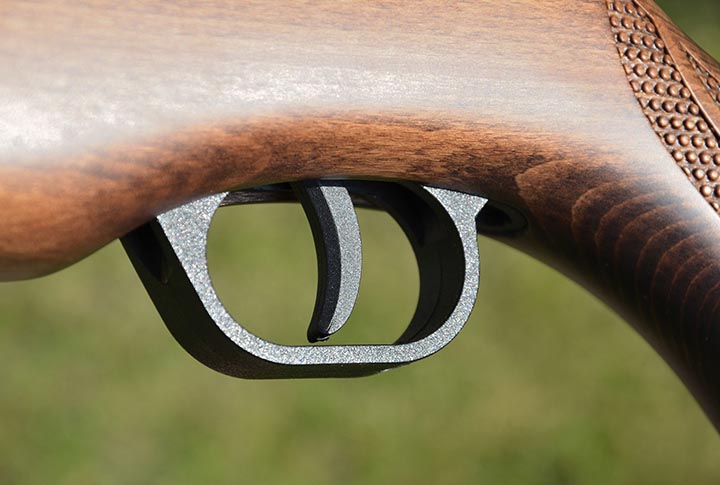
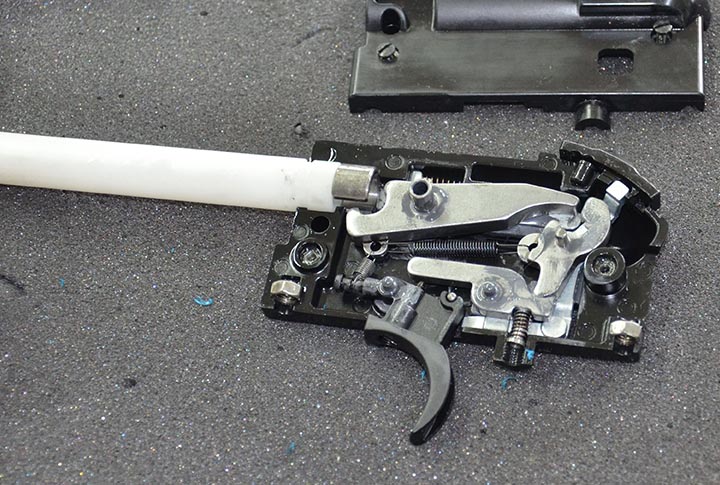
At the other end of the spectrum, we have the full match trigger, and here, the more sophisticated 2-staged designs can add several hundred pounds to the cost of a top gun alone. In the best examples, many more components are utilized, with a series of small sears each acting upon each other.
Even Weihrauch’s famed Rekord trigger, fitted to their spring guns, has around 18 components, which demonstrates why inferior designs can’t match it for performance.
Where full match rifles are concerned though, the end result can be a dramatically reduced final release weight, sometimes down to just a couple of ounces. Ultra precision and predictability, are non negotiable for those that wish to maximize results. However, it’s true to say there are a sea of rifles with triggers that lie somewhere between the two – far more efficient than the basic beginners guns, but less sophisticated than those top Olympic grade machines.
Personal Preference
Personal preference for how a trigger should be set, does play a part, although the principles of good trigger technique remain the same. So let’s focus on how we can get the best from the trigger, improvements that can be made, and ‘best practise’ along the way. We all adapt an approach to suit ourselves up to a point, but that starts with being aware of the different elements that affect the final shot release, so time to focus on some basic elements.
Length of Pull
Gun fit is an area where manufacturers are placing more emphasis these days, and so many more guns come with adjustable stocks, which all helps the cause.
Having the correct ‘length of pull’ will pay dividends in the long run, and this is the measurement between the trigger blade and the shoulder, or end of the butt pad. It’s also something which can be easily measured, by sitting the butt of the gun in the crook of the elbow, then take note of where the palm of the trigger hand naturally sits.
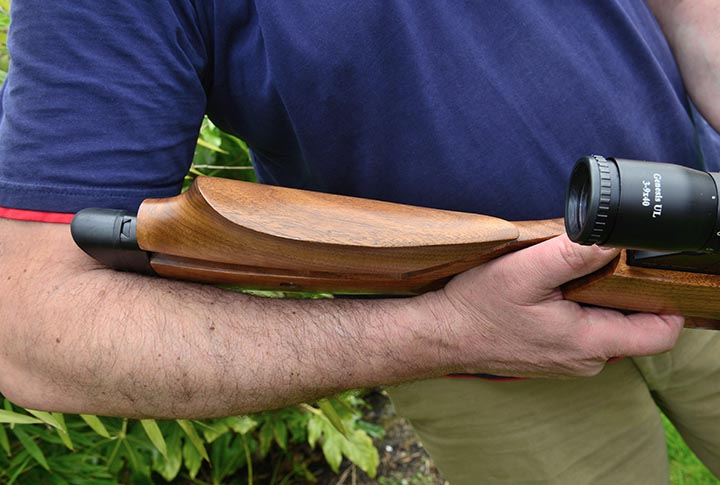
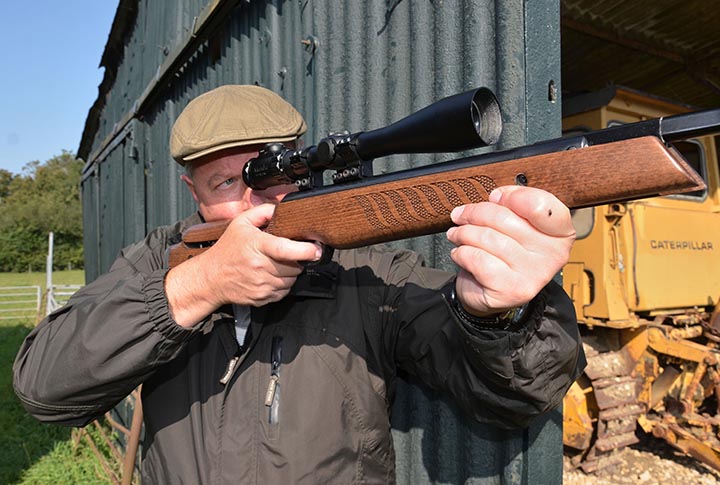
Ideally, the palm will fall around the grip, and the index finger fall naturally to the trigger blade, but if this isn’t the case, then it maybe necessary to make adjustments to the stock. By shortening or lengthening the butt.
The whole idea is to end up with a natural shooting position, free from stress and without having to over reach to release the shot.
Blade Position
If length of pull on a particular gun is near to ideal, some final tweaking can be made by altering the actual position of the trigger blade. Many more rifles (other than top flight match rifles) now come fitted with an adjustable trigger blade of some sort, and this can be an invaluable asset.
Some may be designed to allow for the blade screw to be loosened with an allen key, and then the blade slid laterally along its support block. In addition, by slackening another tiny screw, the blade may be moved up or down, or angled around its pillar. Fine setting the blade in this way can make a dramatic difference to the feel and handling of a particular gun, so it’s well worth the time and effort involved.
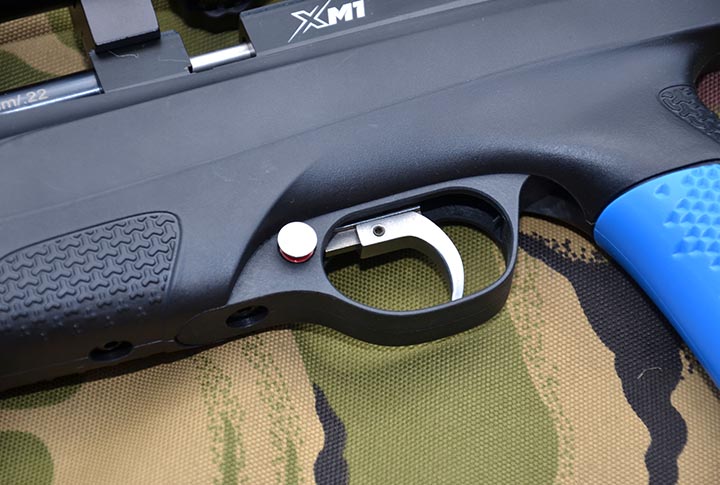
Set back triggers were popular as a custom feature on springers, since the early 80’s, and the idea is again to position the blade so that it falls naturally for the hand, avoiding having to over stretch. Custom companies such as Airmasters and Venom Arms were specialists in this field, but latterly, companies such as Rowen Engineering have taken up the baton.
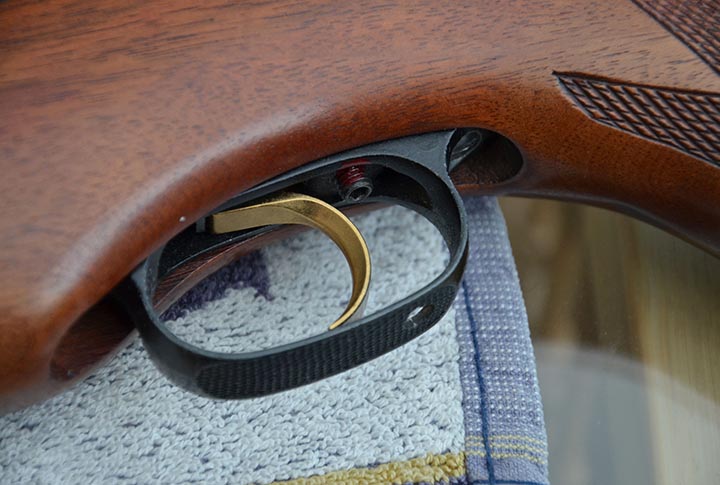
Again, personal preference can come into play, and hand size may also dictate the guns final configuration. Get the setup right though, and our shooting position stays relaxed with minimal muscle strain.
So we’ve established that getting the length of pull right, and the position of the trigger blade, can make a big difference. Next time out in part 2 of this blog, we’ll take a look at different types of blade, weight and adjustment.
Happy shooting!
Range & Country