Pellets are the vital final piece between us and the target, and it’s stating the obvious, but it’s fairly pointless purchasing a top class airgun, only to feed it cheap, substandard ammunition, then wonder why it’s spraying like a shotgun.
Consistent Manufacture
Like any industry, various manufacturers gain a reputation for quality, and where pellet production is concerned, it’s all about consistency and fine tolerances in the process, in terms of both weight and dimensions. Very shiny pellets often have a greater antimony mix (the other metal added to lead at the production stage in order to add hardness), and experience will tell us what sort of pellets work best in our gun. Harder pellets may result in greater lead deposit in the barrel over time, necessitating a more frequent barrel cleaning regime, and at the highest level of competition, this is all worth consideration.
Cheaper pellet brands can be fine for practise, but cost cutting can often be at the sorting stage, all contributing to a more random mix of weights (and occasionally shapes) in the tin! It’s a basic rule, but where pellets are concerned, on the whole, you do get what you pay for.
Field Target (FT) Shooting
Field Target competition sees knock down targets set out between 10yards right out to 55yards, and whilst a pellet with a flatter trajectory may seem logical, the fact that shooters are allowed to use scopes to ascertain target distances, means, if your confident that your range-finding is accurate, the use of a heavier pellet could well be beneficial. JSB are a premium manufacturer, and their JSB Exact Heavy Diabolo weighs a significant 10.34 grain in .177. If it suits the barrel, then that additional weight may just help in windy conditions.
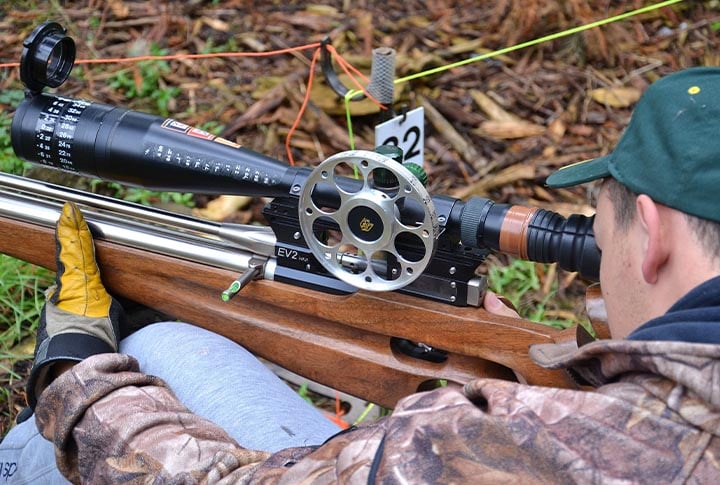
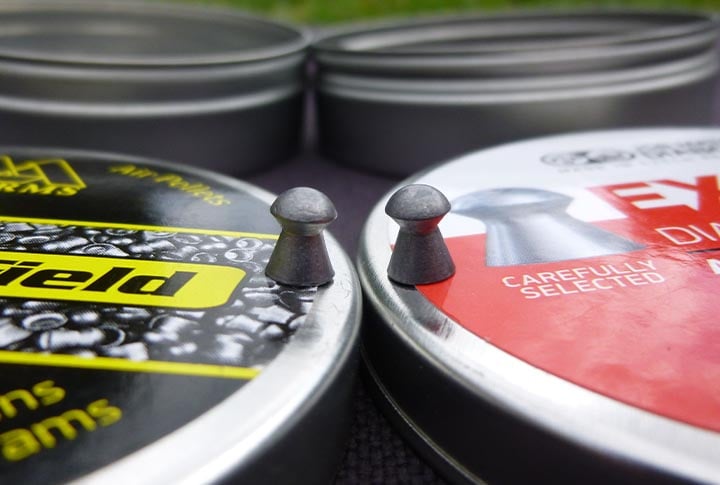
Many competitors opt for the favourite 8.44 grain JSB Exact in .177, or the highly regarded Air Arms Diabolo Field, which is much the same pellet marketed by the British manufacturer.
Indeed there are several other examples of such tie-ins – the FX pellet, Rangemaster Sovereign, and others. Czech based JSB have emerged as one of the most successful pellet manufacturers in competition over the last couple of decades, and if they suit your gun, they are a relatively safe bet.
Other brands do exist as they say, and where classy performance is concerned, the likes of RWS Superfield are highly regarded, as well as H&N with their Baracuda 8 – both coming in at the same 8.44 grain weight in .177
Hunter Field Target (HFT)
Choose to take part in the sport of HFT, and that ruling that the shooter can’t adjust the scope or gun, once the competition has started, means we have to be more instinctive in judging target distance, with no technical help permitted. In this scenario, lighter pellets, if they offer a flatter trajectory, are worth some experimentation, since a flatter trajectory should mean in theory, a greater margin for error, possibly resulting in more targets falling. For this reason, pellets such as JSB Exact Diabolo at 7.33grains in .177, Air Arms Diabolo Express at 7.87grains, and Crosman Premier at 7.9grains could be viable.
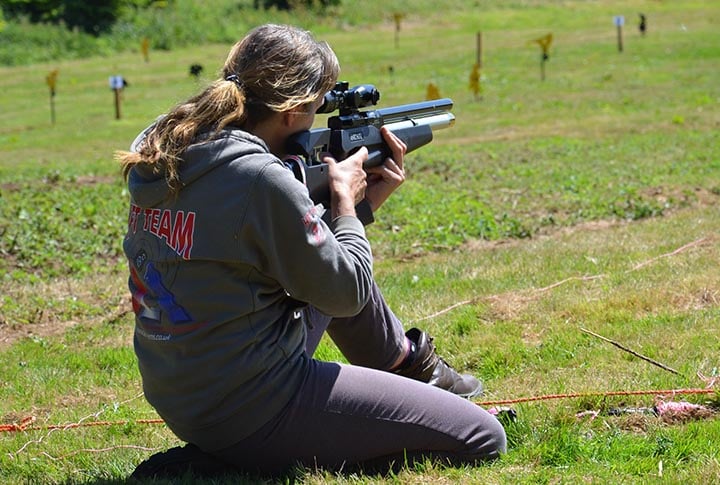
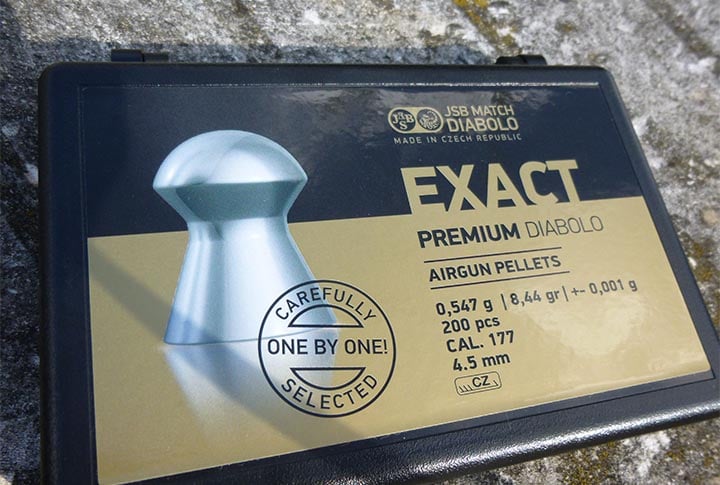
Webley Mosquito, Weihrauch F&T Special……the list goes on. Check the groupings, learn the trajectory, and it should eventually all fall into place.
Again, theory is all very well, but if a particular gun groups better with a slightly heavier pellet, then raw accuracy and downrange grouping, potentially trumps any trajectory advantage – within reason.
Compatibility
And here we come to compatibility. Airguns can be quirky, and minute differences in the rifling of one barrel to the next, even of the same model, can mean that a particular pellet may suit one gun and not the other. In addition, fractional differences in one batch of the same pellet compared to another, can mean they don’t all suit a particular barrel.
Quality pellet brands such as JSB often come with a sticker on the reverse of the tin, and this provides information which can prove invaluable to serious competition shooters. There will normally be a die number (the particular machine the pellets came from), a batch number, a date of manufacture, and also the pellet head size.
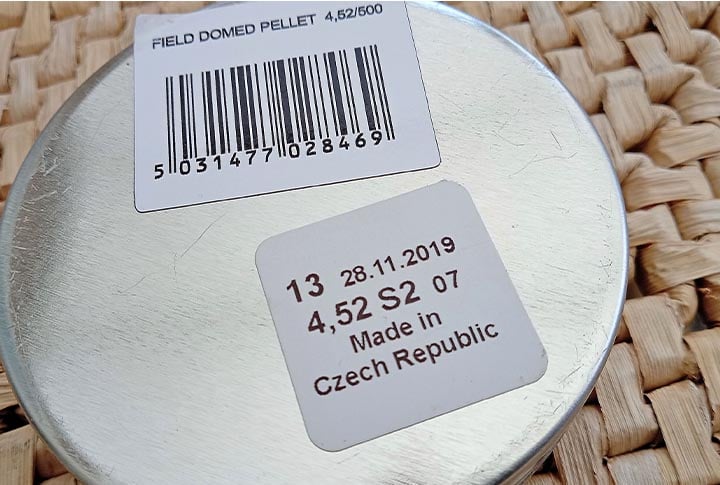
.177 calibre is referred to as 4.5mm, but pellets can show 4.50, 4.51, 4.52, and even occasionally 4.53 – all referring to head size. It may be that a particular gun barrel is a little over-sized and only shoots well with 4.53’s, or the rifling is quite tight, and it needs pellets with 4.50 head size. Either way, the fact this sort of choice now exists, demonstrates the level of commitment to the enthusiast from the manufacturers. Find a pellet that suits, then maybe buy a quantity of tins with identical date and die markings.
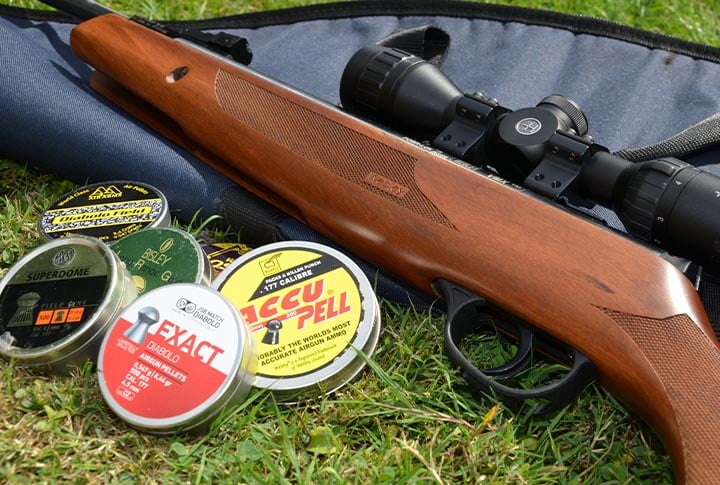
So there really is no substitute for getting out on the range and pellet testing with a particular gun to check compatibility. And to that end, multipacks of pellets such as the JSB Pellet Tester Pack, carrying a small quantity of several pellet specifications, can be a huge help. Take the time and put in the effort, and finding the right pellet for the job can be immensely satisfying.
Good Shooting!
Range & Country