As with so many aspects of airgun shooting, choosing the right pellet can be a daunting task, especially given the huge number of brands and different designs on the market. Anyone new to our great sport can therefore be forgiven for being understandably confused at the outset. So pull up a chair, get comfy, and we’ll hopefully cover some basic pointers, that will make the choice that little bit easier.
What Type of Shooting?
OK; we’ve covered choosing a calibre in a previous blog, but here, the idea is to feature some actual pellet brands and designs, and give some pointers on their intended usage. A key question at the outset still has to be – what type of shooting do you want to do?
If general shooting, ‘plinking’, and just enjoying informal target shooting down at the range, then in theory, any pellet can be used, but there’s little point in using top class brands in a budget, mess about gun, and the costs may not be warranted. That said, a counter argument could be that it’s more fun to hit more targets, so use the best pellets you can afford.
Different Designs?
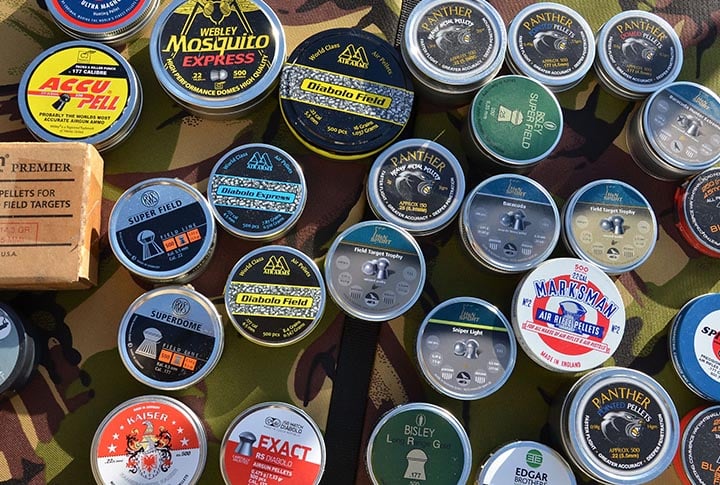
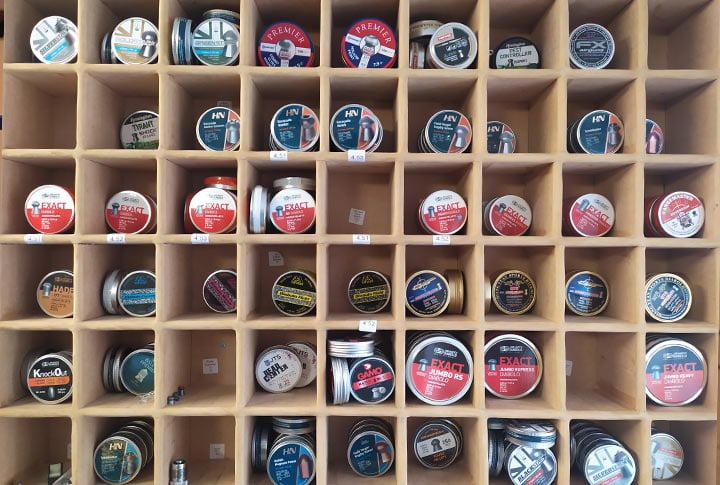
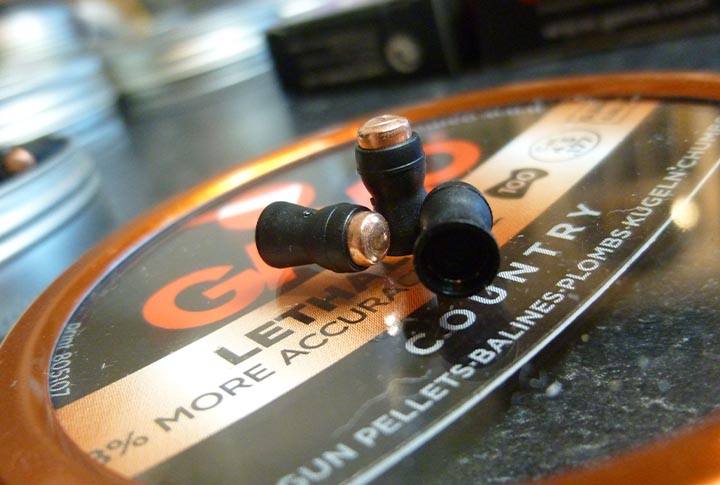
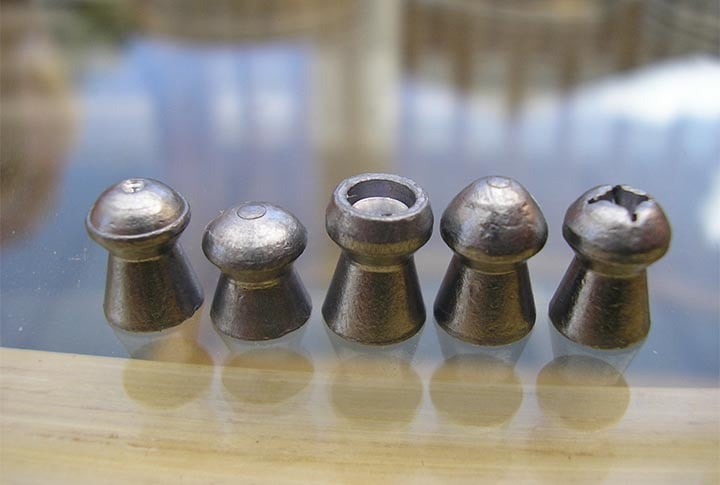
A quick glance at the market reveals some truly eye-popping pellet designs, with plastic inserts, triple body rings, ultra points etc., Indeed even the idea of a ‘sabo’ system where an outer shell drops away as the pellet leaves the barrel, was dabbled with back in the ’80’s. But it’s fair to say that, despite a plethora of radical designs over the years, the very best pellets available today are still of the traditional waisted, diabolo shuttlecock profile, with a dome head.
This time-honoured shape may look conservative, yet it has proven to be ballistically efficient, and highly effective in most scenarios. Opt for the correct paperwork, and jump into the world of high power FAC airguns, (a topic all on its own) and the latest solid slugs, designed to withstand the higher pressures involved, may well prove the answer. But at sub 12/ft/lbs energy, the humble diabolo dome-head still holds sway, for sheer repeatable accuracy.

Hunting
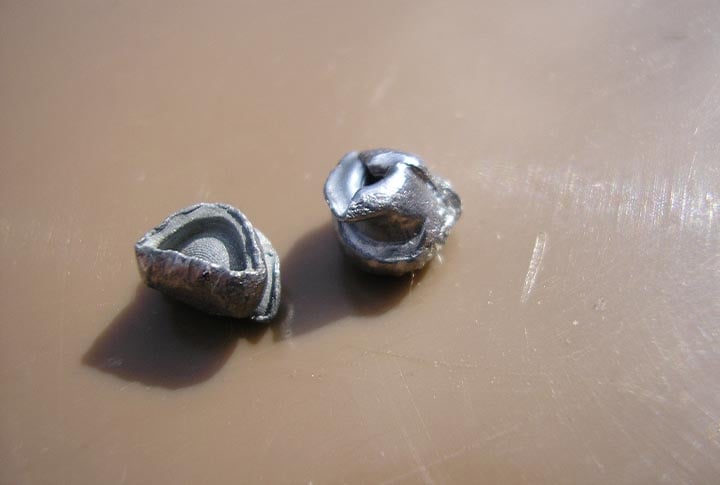
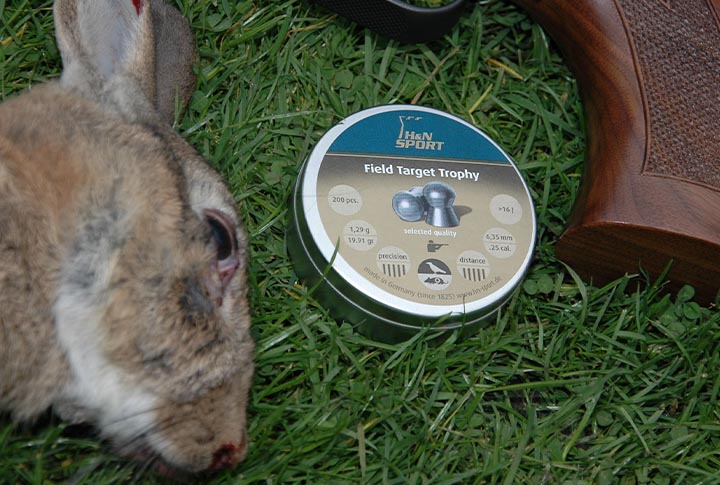
Where hunting is concerned, this can be a different matter, as certain pellets are designed to deform on impact, so as to impart maximum energy to the quarry. This is done by incorporating features such as a hollow head, or a deep cross cut in the head (H&N Baracuda Hunter Extreme), designed to cause the pellet to disintegrate on impact.
Unorthodox designs will interfere with ballistic efficiency for sure, and their long range trajectory may well be more pronounced, so less easy to read. The advantage comes where shooting quarry at known distances or closer quarters, where the greater knock down energy may well prove effective. Pellets such as BSA Max with its heavier mass, (10.49grains in .177 calibre, and a whopping 21.7grains in .22), or the BSA Blackstar, with a hollow head, are two more examples, well worth considering, but there are many more.
Indoor 10m Match Shooting
Indoor 10metre shooting is the discipline featured in the Olympics, and this was always traditionally shot using ‘wadcutter’ flat-headed pellets in order to achieve a clean cut hole in the paper targets used. This made the scoring process more precise. However, with the targets evolution to electronic systems, that now use a computer to automatically track and pinpoint the shot, the need for a clean cut hole no longer exists, and the use of waisted dome-headed pellets has crept in. Investment in such target systems can be prohibitive for the individual of course, so for paper targets in practise, stick to wadcutters.
Pellets such as .177 RWS Hobby (7.0grains weight) are a budget option but are perfectly acceptable; whilst for higher quality, the top class .177 RWS R10 Match at 8.2grains has few rivals.
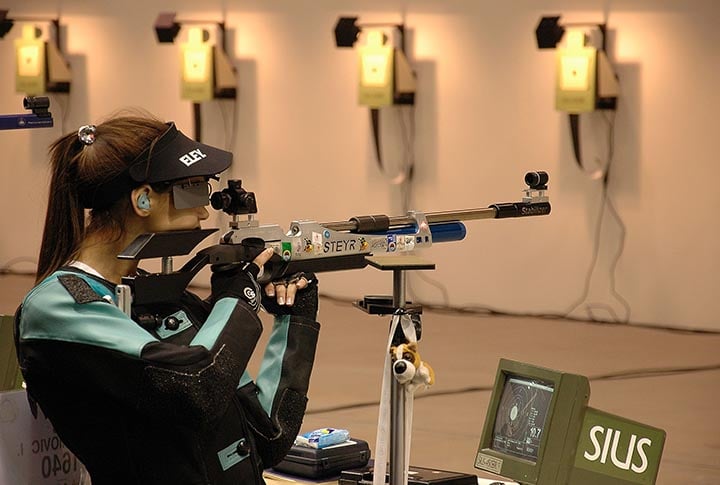
With Indoor Match shooting taking place over a static range, set at 10metres, it’s a known distance so trajectory is therefore irrelevant. For this reason, the Match grade rifles used tend to only generate low power, (typically 5-6ft/lbs). In this arena, the use of a heavy projectile fired at low velocity would prove sluggish and result in a slower lock time for the shooter (the time it takes between the trigger being pulled, and the pellet exiting the barrel). For this reason, match ammo has traditionally been fairly light, around 7grains, although as mentioned, dome-heads such as JSB Exact at 8.44 have begun to feature.
Success Across The Board
We should never lose sight of the fact that we shoot for enjoyment number one, but hitting more targets more regularly, can play a part in that, whether plinking, hunting, or competing. In the second part, we’ll cover outdoor airgun competition, and the pellet choices that can help smooth the path to success.
Until then, enjoy your sport, and happy shooting!
Range & Country