It’s often been said, that if we had an airgun shot, and a live firearm shooter, and they both had to shoot their own discipline, and then the others discipline, the airgun shooter in theory would prevail. Think about it, and there really is some basis in this, by virtue of the super slow firing cycle of the airgun, compared to the firearm, and our adaptability and the allowances that we have to make in order to deal with it.
It actually all comes down to a question of ‘lock time’.
Definition
Now for the uninitiated, ‘lock time’ is the time it takes between the trigger being pulled, and the projectile exiting the barrel. Where firearms are concerned, the presence of gunpowder means the process is astonishingly quick.
Where an airgun is concerned, the pulling of the trigger effectively starts a chain of events, and the subsequent lock time is dramatically slower. In the case of a pre-charged pneumatic, as the trigger is pulled, it trips the sear, which releases the hammer, which then strikes the valve, causing it to open and release a pulse of air. Air pressure then builds up behind the pellet, and it travels down the barrel.
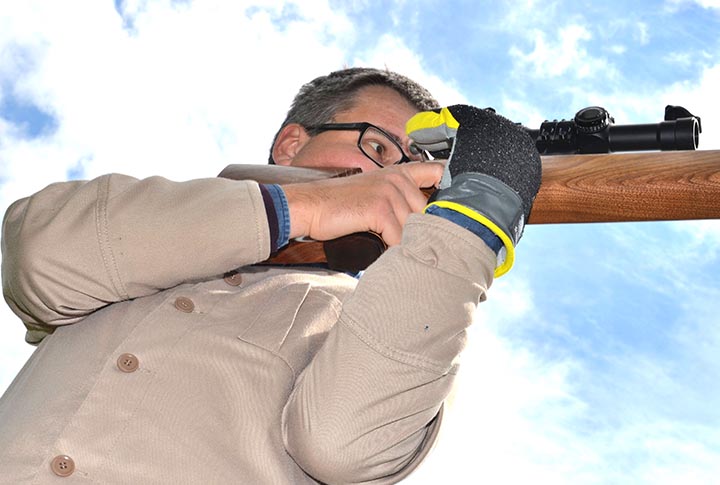
In the case of a spring powered rifle, the trigger is pulled which trips the sear, and this releases the piston which then moves under huge pressure from the compressed mainspring inside. As the piston moves forward, it compresses a volume of air in front of it, and this then powers the pellet, which moves down the barrel. Just describing the process, highlights that chain of events, and the subsequent ‘lock time’ is understandably relatively slow, when compared to even the PCP.
So what?
So what’s the relevance of all this?
Well, if we are holding our rifle, expecting to hit the target, that relatively slow lock time means that for just a few milliseconds after pulling the trigger, the pellet has still not left the barrel, and for this brief period, we are actually able to influence the impact point, with great potential to pull the shot off target!
With near recoilless performance, it’s hardly surprising novices find shooting a PCP so much easier than a springer, yet focussed technique and a measured approach, are still required to get the very best from the system.
Delayed Reaction
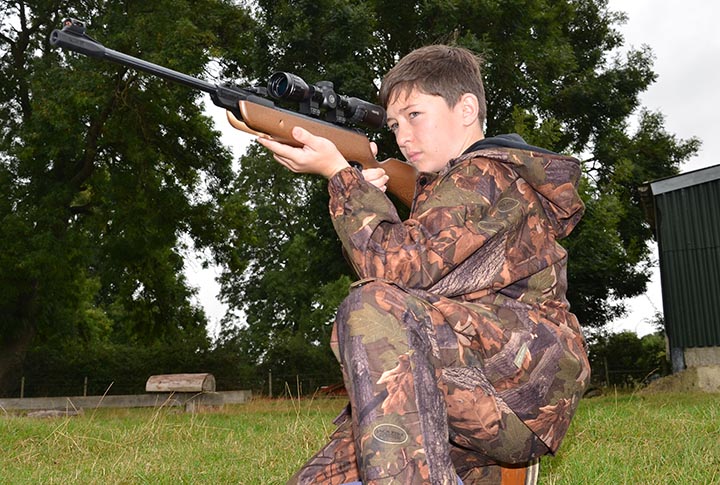
In order to cope with the relatively slow lock time, the answer is to first be aware of this phenomenon, and secondly to build in what’s called ‘follow through’ into our shooting technique, whether shooting springer or PCP.
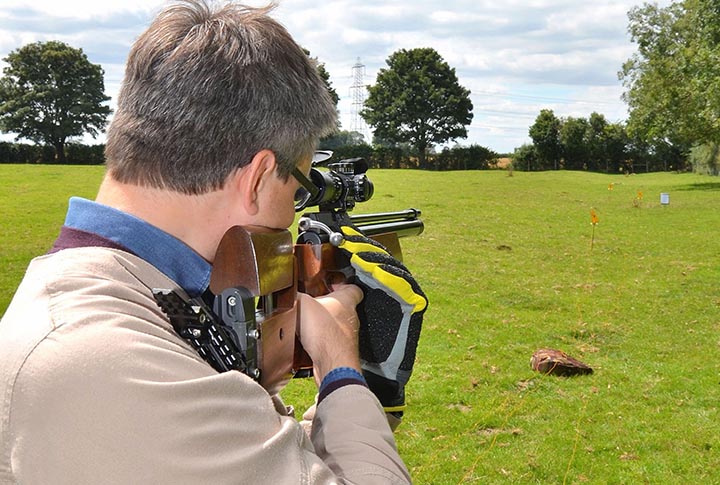
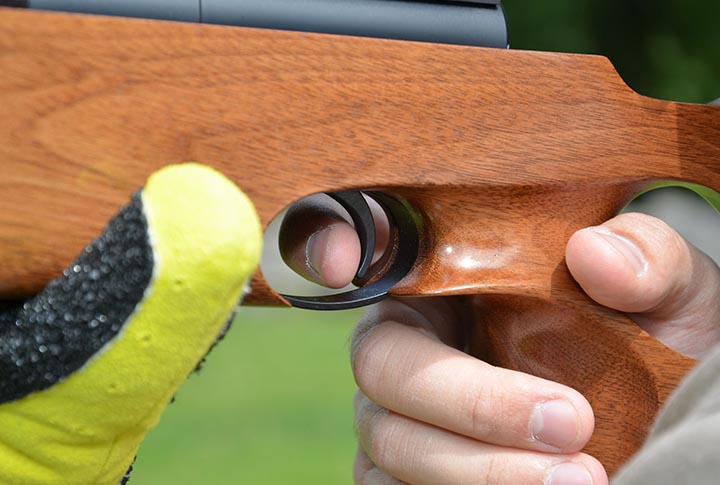
‘Follow through’ is the basic principle which underpins the whole science of shooting airguns, and the idea is to train ourselves to be calm and relaxed, and momentarily freeze on the target, whatever the shooting position. Line up the sights on the target, be aware of controlling breathing in a calm manner, then when ready, gently take up the first stage of the trigger, and when all feels right, gently squeeze…….but get used to staying in position on the target for a few seconds after pulling the trigger, as this is the critical moment. Ideally, this ‘delayed reaction’ approach needs to become second nature.
Competition shooters factor in this approach initially into their training, but of course like everything, with practise, it all becomes part of an automatic routine- indeed second nature. In this scenario, follow through often allows the competitor to spot shots in flight, and highlight errors for windage or shot placement in general.
For hunters, lining up on live quarry, it’s perhaps even more important that we maximize performance in the interests of a clean kill, so ‘follow through’ is every bit as important here – if not more!. Again, it can help to calm the shooter when adrenalin gets going in the excitement of the moment.
Conclusion
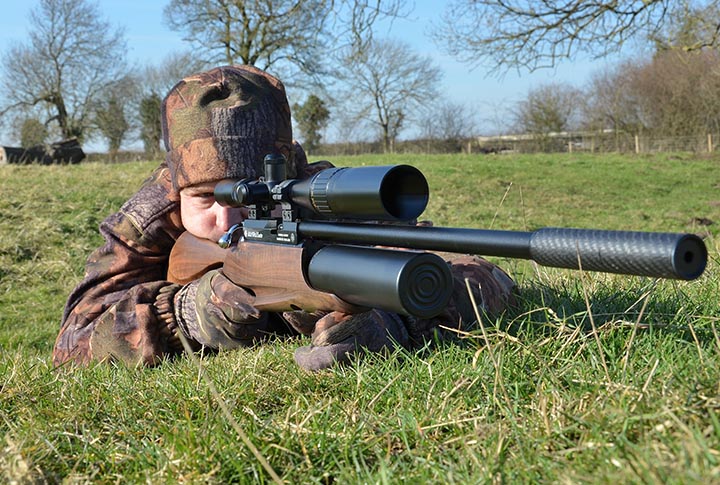
In simple terms, the process of ‘follow through’ means not being in a rush to jump out of the shooting position, until the shot has safely left the gun, giving it every chance to fly true. Of course, as with many aspects of airgun shooting, we are talking tiny margins here, but margins which can make a significant difference. It’s all about attention to detail in order to push performance to the limit, and being aware of our guns lock time, and taking steps to make allowances in order to deal with it, is all part of the process of learning to shoot airguns as efficiently as possible.
As always, good shooting
Range & Country