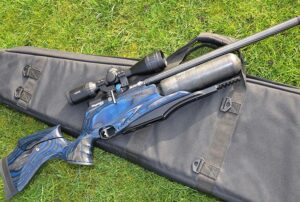
The classic adage, -‘We’ve never had it so good’, can definitely be applied to airgun shooters in today’s market. Just consider all the sophisticated hardware now available, and the way technology has played its part, and the choice across the board, whether the guns themselves, scopes or accessories, is simply incredible.
For some though, the technology side holds no appeal, and we totally get that. Keeping things simple means there’s no pressure for results, and a myriad of guns cater for these shooters, as well as total beginners, or shooters on a budget.
Valuable Lessons
However, one aspect of airgun shooting which can be incredibly rewarding, and so easily overlooked, is the humble art of shooting with open sights. Admittedly many rifles are supplied without open sights, when the gun is intended for either hunting or competition use, but an incredible number come factory fitted with sights of one sort of another. We can all be in such a rush to bolt a scope into place, that a fascinating element of marksmanship can be bypassed altogether, which seems a shame. This blog serves as a spotlight on these dark arts, and a reminder that they can be worth persevering with.
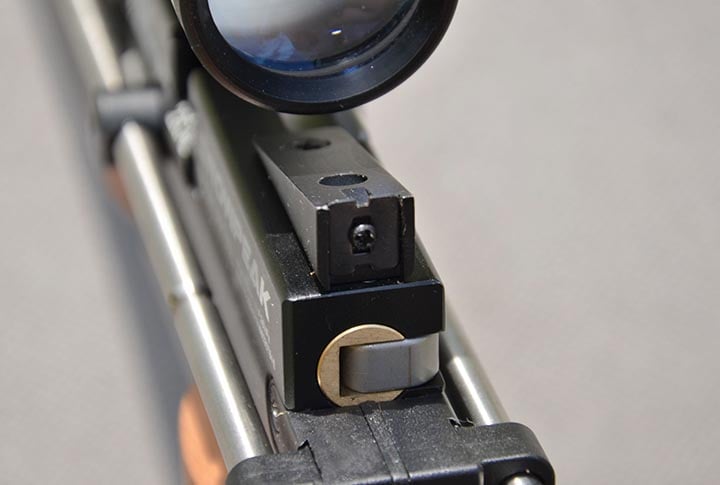
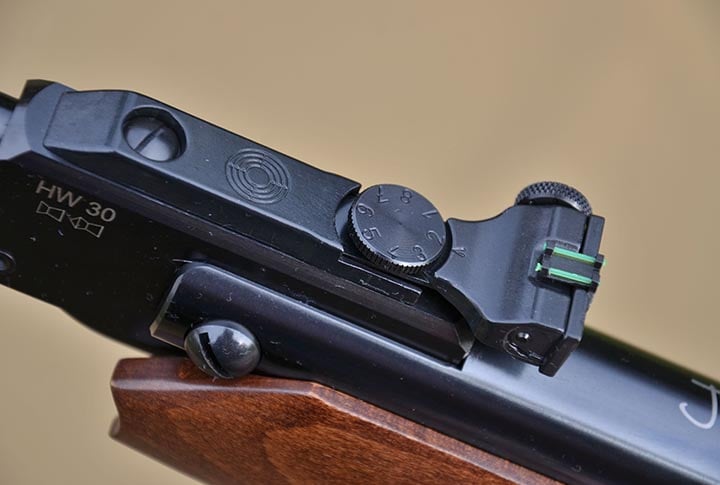
Some sights are incredibly basic, either being non-adjustable, or featuring just a back plate on the rear-sight, which can be slackened off with a screw, the aperture or peep hole moved, and then the screw re-tightened. However, most come fitted with conventional open sights, with a post (bead) foresight up front, and an adjustable rear sight that forms a notch at the back.
Correct Sight Picture
Maintaining a correct sight picture with this type of sight is a challenge, and is illustrated in the basic diagram here.
The idea is to view the tip of the front post, held on the centre of the target, but also whilst it is being viewed centrally through the notch of the rear-sight. The tip of the notch also needs to be lined up perfectly with the top line / height of the notch. Let it wander higher or lower than this line, or off to one side, and the shot will in turn deviate. Again keep this perfect sight picture absolutely level, otherwise errors creep in, such as cross-over, where shots fall to one side of the target or the other, further down range.
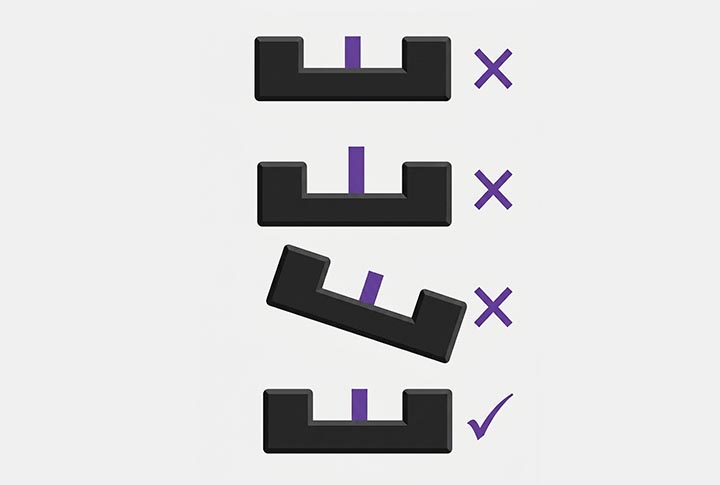
Cant is where the gun is held in the shoulder, yet allowed to tilt off slightly to one side. This means the sight will not be level, and that’s where the cross-over error occurs.
So do we keep both eyes open or use just our leading eye? Well latterly, the thinking has been that it is more relaxing for the eye muscles, if both eyes are kept open. But as usual, guidelines are just that, so what suits the individual takes precedence – especially if it works!
Fibre Optics
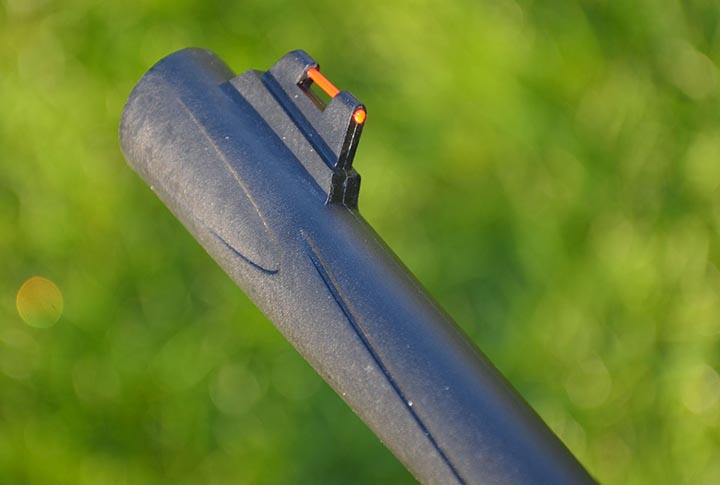
Conventional open sights may just be all black metal or plastic- the post within the notch- but many modern airguns now incorporate fibre optic open sights, and these utilize tiny fluorescent elements, designed to make use of any ambient light – typically a bright red dot up front, and a notch formed with two green dots. The difference, shooting with these in dim conditions can be quite surprising.
Windage and elevation are often fully adjustable via user friendly finger wheels, and a true zero here should be easily achievable.
Dioptre Sights
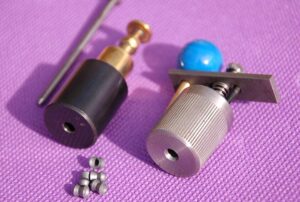
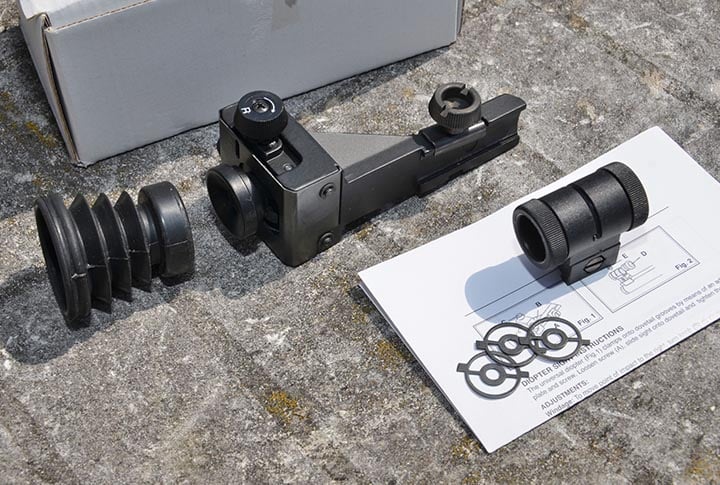
A more sophisticated type of open sight is the dioptre sight, and this takes the form of the conventional foresight, possibly with the post held in a tunnel assembly which can take interchangeable elements, and then the main rear-sight unit- a shrouded circular aperture, which produces a small circular image, sometimes magnified. In use, the post or ring of the foresight is held on the centre of the target, and in turn viewed through the centre of the aperture.
This form of sight features on indoor 10Metre match rifles, and will incorporate an adjustable mechanism to again achieve zero.
Less Haste – More Exploration
So there really is plenty of time to play with telescopic sights and the like, further down the line. But why not spend some time learning the ropes, and appreciating what basic open sights have to offer at the start. It’s time well spent, instilling discipline into our positional approach – it benefits from a consistent hold, and stance, and with that all being the building blocks for successful shooting whatever the end goal, it serves as great training all round.
In use, open sights can be highly effective out to about 25yards. After that is down to the individual and their determination.
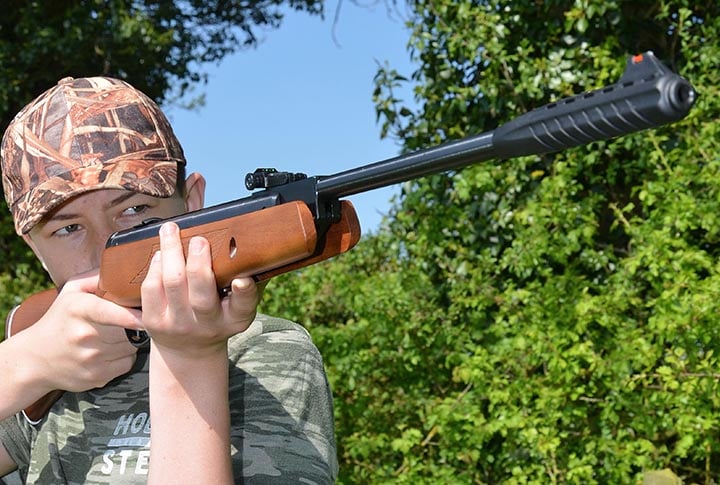
An obvious caveat exists; for as we get older, our eyesight can begin to deteriorate, and this will possibly dictate just how far we can indulge ourselves, but even here, limiting distance can still allow for participation.
Sport for All
In short, open sights are a great tool to teach youngsters the basic art of marksmanship, but they also offer a simple pleasure, and a satisfying skill element to be enjoyed by all.
Get out there, try open sights and as always happy shooting!