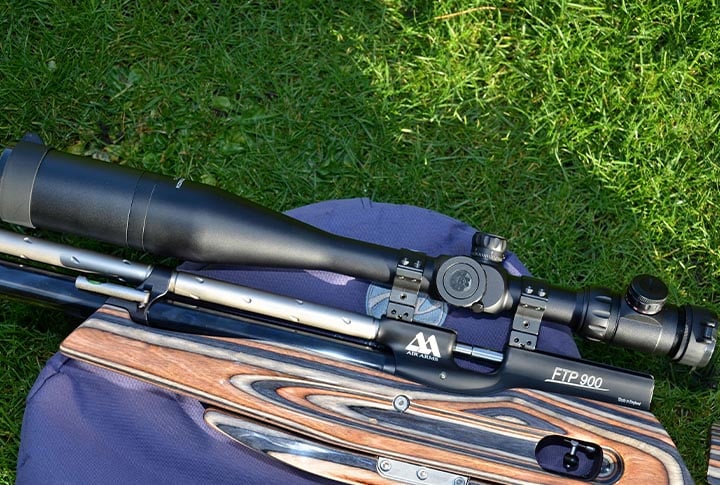
So we’ve established that Field Target allows the competitor to range-find using the scope, (whilst electronic laser range-finders are not allowed) and a typical specification is 10-50×60, denoting that magnification is adjustable from 10x right up to a whopping 60x.
In this spec, the final 60 means an objective lens of 60mm – again sizeable!
Parallax
So how does the range-finding system work?
The thinking is that the higher the magnification of the scope, the shallower the depth of field can become, and this makes it easier to read off target ranges. Magnification of 50x is very popular, and with March Scopes taking a World Field Target Title with one of their 80x magnification models, (the highest mag currently available in a scope), the point has been well and truly made!
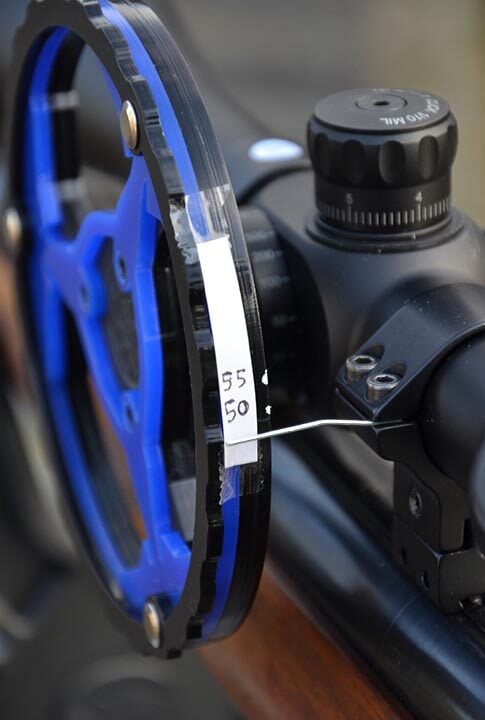
The system utilizes parallax error, and for those new to the term, parallax is the apparent movement of the reticle in relation to the target as head position alters. The parallax correction dial on an FT scope is marked with target distances, and this may come pre-marked from the factory, or more commonly, worked out and added by the shooter.
Side-wheel scopes now dominate the sport, and the side-wheel is effectively the parallax dial.
Technique
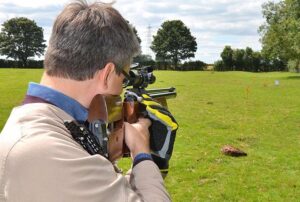
And so to the range-finding process. The routine sees the shooter walk through the wooded course of 40 targets or so, and arrive at the open ‘gate’ for lane1. The gate is a gap between two posts. He/she then assumes their most comfortable sitting position (unless it’s a discipline shot – enforced kneeler or stander), and readies for the shot.
The range-finding technique sees the shooter wind the parallax dial to minimum, sit down to view the target on the lane, then gently wind through the distances, until the target is no longer blurred and comes into sharp focus. At that point, the target distance can be read off the dial. Bad light with a target placed in a dark wood setting for example, can play havoc and it’s all part of the sport, but the top exponents, unsurprisingly can determine the distance of a target to within a yard, time after time. Some competitors choose to range find on ultra high magnification, but then wind it down to a lower mag setting, to actually take the shot; and here, personal choice dictates.
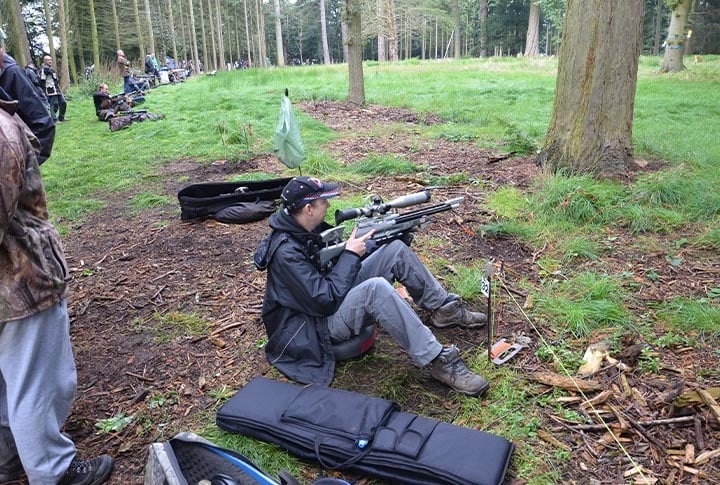
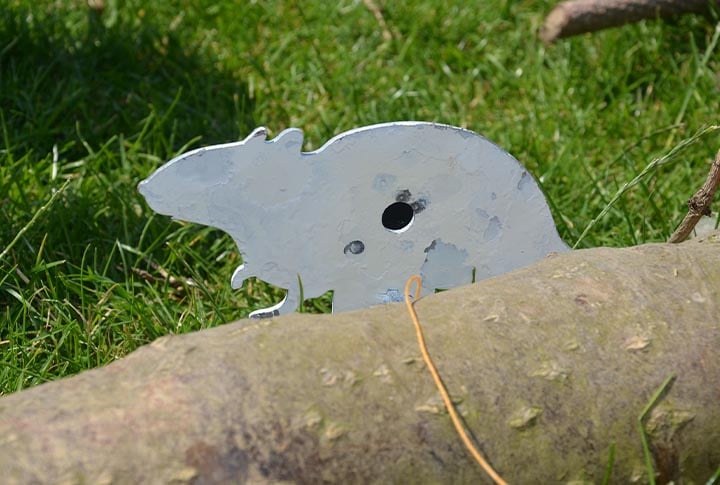
Either way, with the distance ascertained, the scopes turret is adjusted for the correct distance and the competitor aims bang on. Some shooters favour using a scope with a technical reticle with a line for each distance. Either way, the shot can be taken with a degree of confidence.
Options
It’s worth noting that shooting with ultra high magnification will not suit all, but with a bare minimum mag of 32x usable, it’s well worth experimentation. Otherwise, bracketing targets on lower mag is always an option, albeit inevitably less competitive. As always though, practise and familiarity are a huge advantage!
Ruling Body
The sport’s governing body, the BFTA, state that any form of sighting system can be used, with the exception of lasers, and it also states no separate device, designed just for range finding, can be used. Power checks are widespread across FT using an electronic chronograph, and this is for two reasons.
Firstly, it prevents shooters from gaining an unfair advantage. FAC power means having to give less windage, for example. And secondly, any gun exceeding the power limit can be an illegal occurrence at a particular club venue where insurance is concerned. So self monitoring makes sense.
At tournaments, the adopted regime dictates that a competitor’s rifle has to show a velocity at least 5fps below the 12 ft/lbs limit, tested with the actual pellet being used by the competitor. This seems to work well, building in a safety margin, and it also means shooters are less inclined to set their gun’s power level too high for fear of disqualification, keeping things fair for everyone.
Footnote
With top class World Championships being held all round the world, and contested over three days, with 50 targets shot each day, today’s top competitors need to demonstrate a level of stamina, skill, and determination if they are to get a foot on the podium. Yet FT isn’t just for those top shooters, and it’s unique challenge and atmosphere needs to be experienced.
Attend a national BFTA Grand Prix event, and yes it can look a bit like gladiators, with many competitors kitted out in stiff leather shooting jackets, and all manner of rifle add-ons and accessories. Yet don’t feel intimidated, as it’s a friendly environment, packed with enthusiasts just loving their sport. Undoubtedly, at the highest level, it’s an ultra demanding discipline that pushes competitor and machine to the very limits. But that doesn’t stop us enjoying it at our own level, and the grading system is designed to do just that.
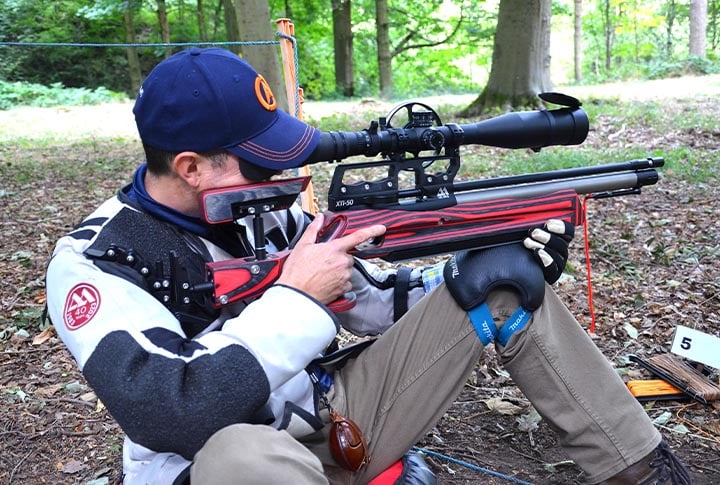
Finding a nearby club isn’t always easy, but for those prepared to travel, a whole world of excitement awaits. Check out the following for more info on this exciting sport:
Happy shooting
Range & Country