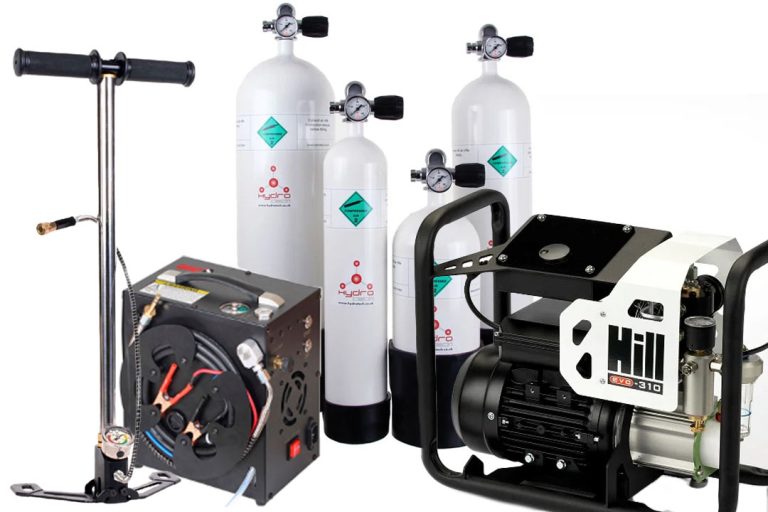
Pre-charged pneumatics (PCP’s), by definition, rely on an external air supply, but the big question once you’ve purchased your shiny new rifle, is what sort of filling kit should you buy. Pumps…cylinders….compressors…..and that’s before you get to carbon fibre! Yes it can understandably be a bit baffling if you’re new to the game, so we’ve put together a few basics here to guide the way, and hopefully illustrate that it’s nothing to worry about.
Filling At The Range
Some shooters seem quite happy to just take their gun along to a club site or range and use the charging gear or pay for a refill on site. There’s nothing wrong with this of course, but it’s firstly a relatively expensive way of charging your airgun, and secondly, the shooter has no independence whatsoever. So purchasing your own charging kit is is the logical route in the long run.
Independence – Airgun Pumps
OK; so you can’t just pick up a bicycle pump and get started, as the high pressure our airguns work to, are in a different league. But there are now dedicated airgun hand pumps which are more efficient than ever, and these give the shooter total independence with regards to air supply. The down side is that pumps can allow some moisture (that’s naturally present in the air) to enter the gun’s mechanism. However, many pumps come fitted with a water filter, and Hill Pumps can be bought complete with their Dry-PAC system, which takes the form of a large pod connected to the pump tube, through which all air passes. It relies on a dry medium inside the pod being replaced periodically, but if this regime is adhered to, then they claim 80-90% moisture reduction.
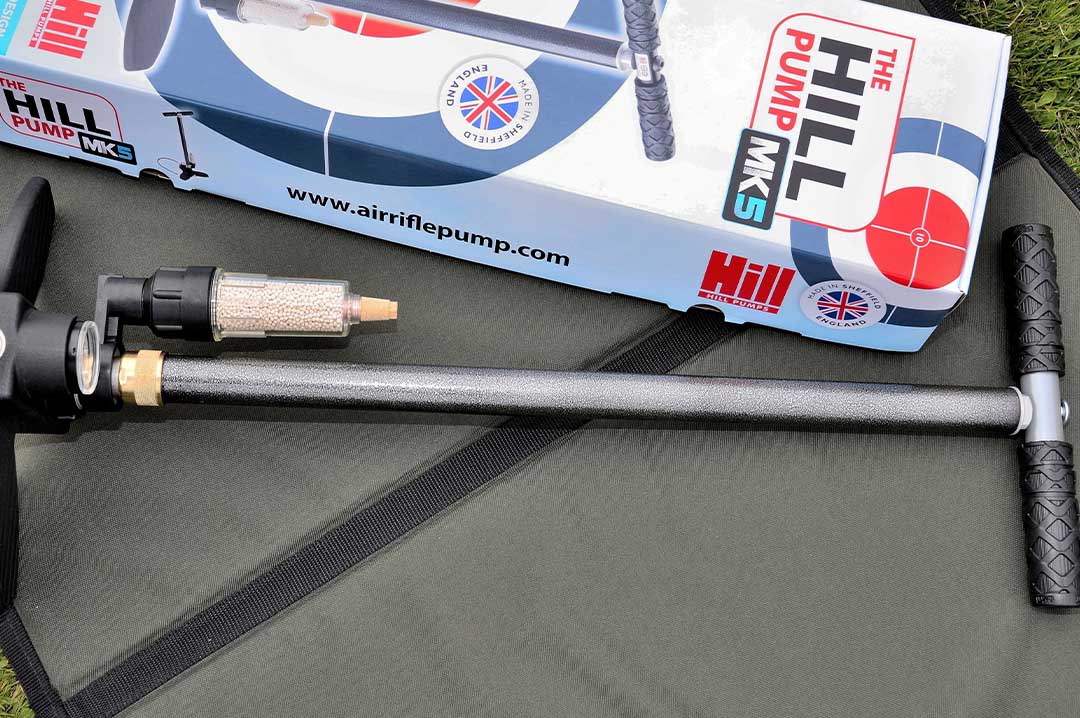
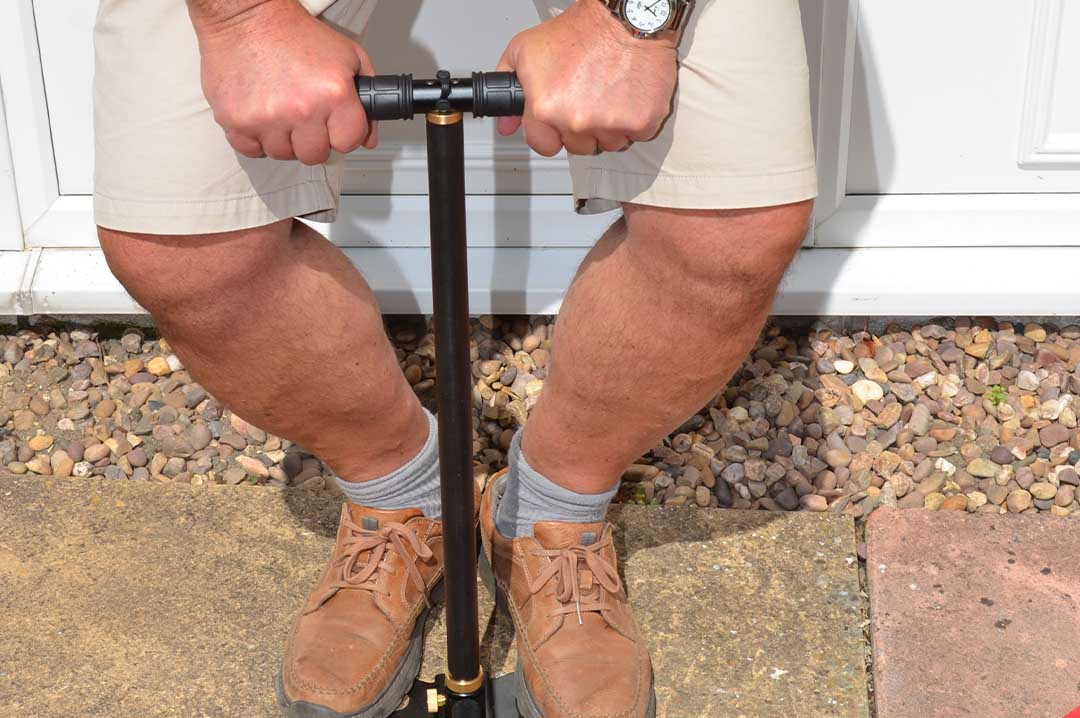
The other obvious down side with a pump is the physical effort involved, and here you can expect to have to input roughly a pump per shot. For younger fitter shooters, pumping up in advance may not be a problem, but pumps in general may not be the best choice for anyone with health issues. And if the PCP in question has a super large buddy bottle onboard, then this in itself can just be too big a task and impractical with a pump. However, for the plethora of slimline rifles, with modest sized cylinders, the pumping effort can be wholly manageable- especially when just topping up the gun’s reservoir after a session or competition, and for many shooters, it’s the perfect solution. We stock our own Range & Country Airgun Hand Pump too which is popular.
PROS: Full independence from diving shops, tests etc
CONS: Physical effort for larger guns, possible moisture inherent in system
Divers Bottle
Probably the most popular method of filling up a PCP is the divers bottle or cylinder, and these can be purchased from us in a variety of sizes to suit the individual’s needs. Standard lightweight steel bottles stocked by us are made either by MDE or Hydrotech, in the Czech Republic, and are available in 3litre, 4litre, 5litre, 7litre, and 12litre sizes. These bottles can be filled to 300bar pressure, and require a hydrostatic safety test every 5 years. A 12litre can be great for those that want a large air supply stored at home, but a smaller lighter bottle would then make sense for decanting/ easy carriage to the club or range.
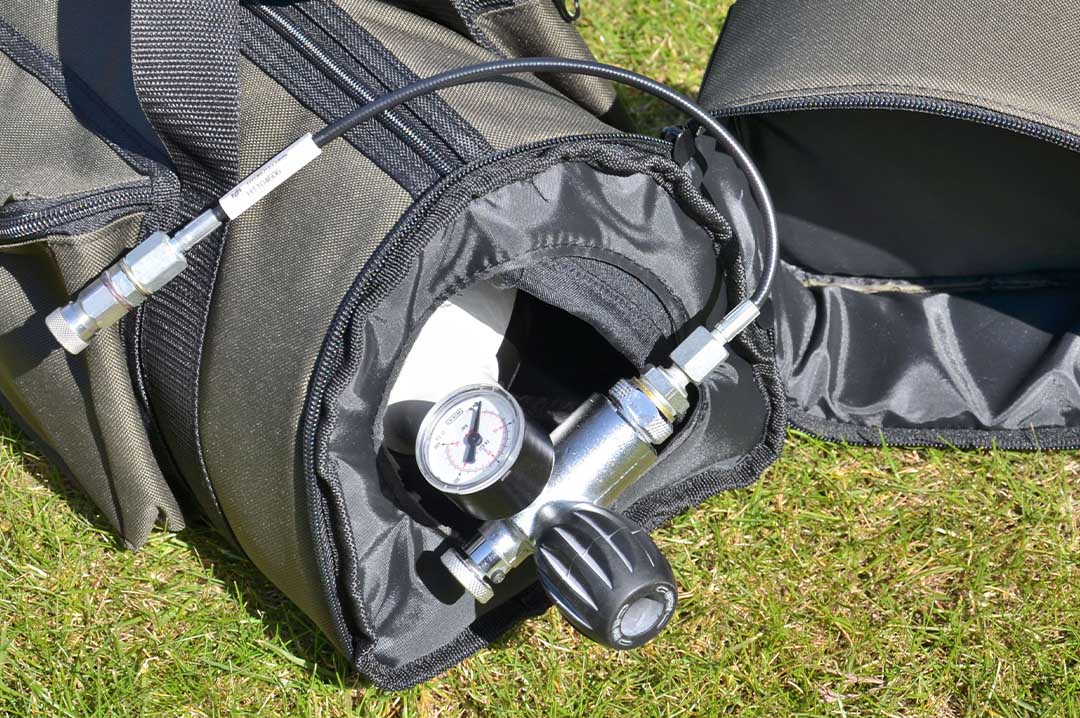
Cylinders made of carbon fibre have become increasingly popular over the last few years, and these have the benefit of being much lighter, but the trade off is that they typically come with a 15year cylinder decommission date, after which it cannot be refilled for safety reasons. Carbon fibre bottles are available through us again in various sizes- the 1.1litre Weekender (intended as a small super portable top-up bottle to take to the range), 3litre, 6.8litre, and 9litre, so plenty of choice for the enthusiast. For an idea of refills, the 1.1litre Weekender will fill an Air Arms S410 6+ times/ the 6.8litre 40+ times.
PROS: Easy to use with little effort
CONS: Some larger bottles can be heavy, Need to be safely stowed in transit, need safety testing every 5 year
Air Compressor
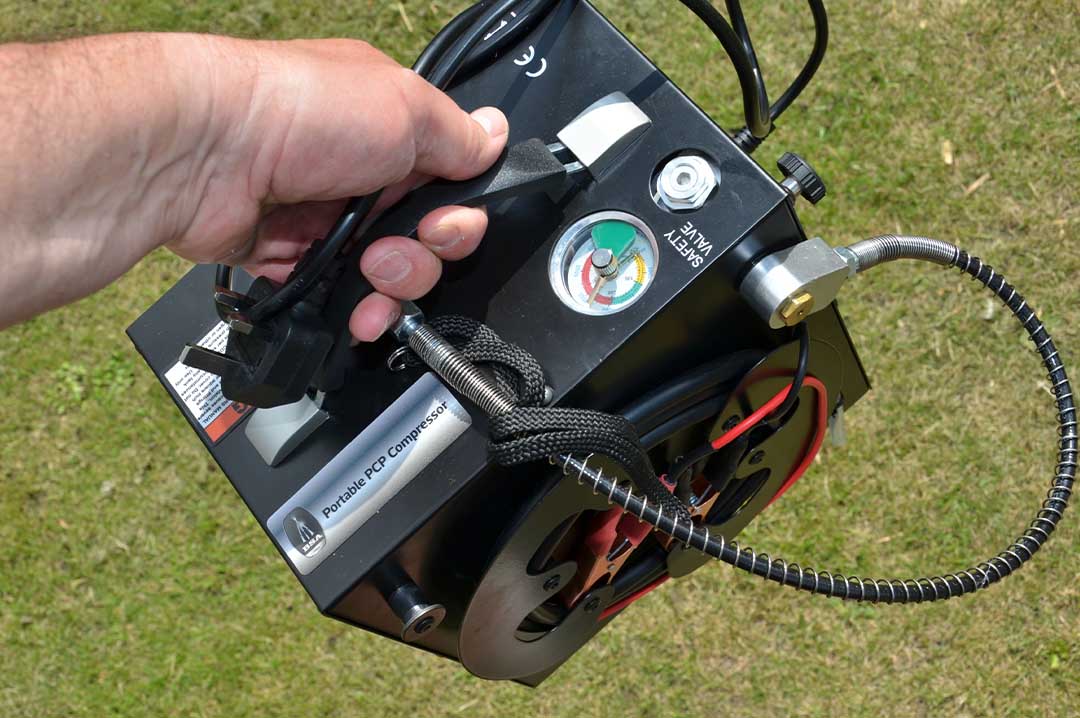
Air Compressors are another option, which again gives the shooter full independence. Portable models from the likes of Wulf and BSA are cheaper costing a few hundred quid, but are intending to just fill the rifle. Move up to larger more sophisticated models, such as the Hill Evo 310 Electronic Compressor, and this costs considerably more, but can also fill cylinders. Look to the Daystate Type 2 MCH6 Compressor, and this is the biggest of the lot and designed to be left at the club or workshop. It’s priced accordingly in the thousands, and again will quite happily fill cylinders.
Plenty of options then, and for any queries, just get in touch.
Range & Country