Like any sport, it’s attention to detail which can make the difference between the top shots at a Hunter Field Target shoot, and the also-rans on the day. Not everyone can be a winner of course, and many shooters are content to take part, and enjoy the day, and neither expect, or strive to be fighting for silverware. However, whether heading for the podium or not, we all want to give it our best, and that means honing our approach, and smoothing out every element of our shooting.
Positional Fine Tuning – Prone
Shooting positions are a case in point – we can just take an ultra relaxed approach, but there are always a few details worth highlighting, which if born in mind when taking these shots, can just pay dividends. So in this and the following blog, we’ll be focusing on how to adopt the most effective shooting positions, and whilst HFT competition may be mentioned, all those benefits transfer out into a real world hunting scenario just as effectively.
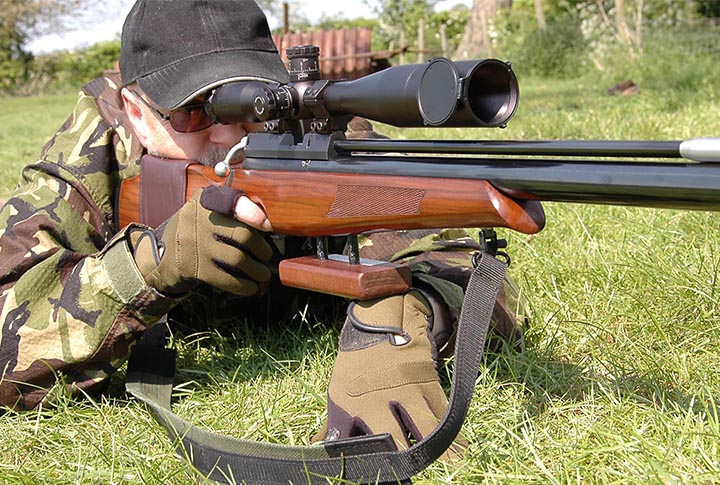
Unlike Field Target, where shooters are allowed to shoot from a sitting position, in HFT, sitting is outlawed, and instead, the main freestyle position is lying down, otherwise known as the prone position. In theory, this should make freestyle shots super steady, but it isn’t always the case.
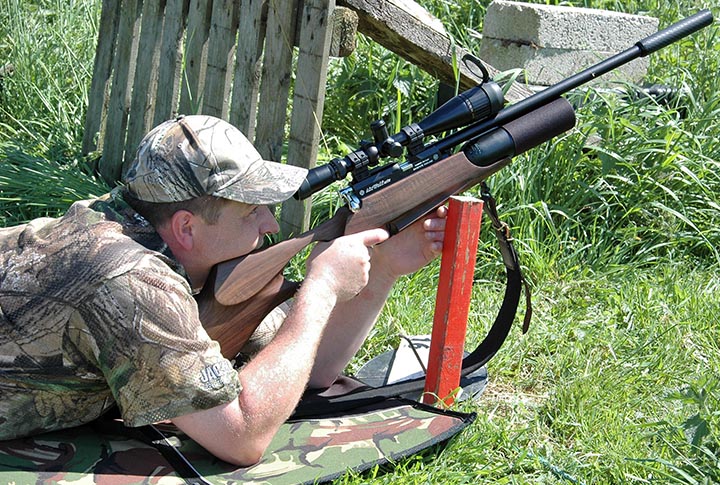
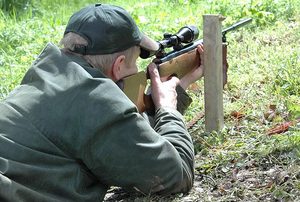
Prone shots are taken with the competitor lying down, and supporting their lead hand with the ‘peg’, as well as supporting the gun. The peg is the wooden or plastic post that has to be touched on each target lane, whilst the shot is being taken, and again, there are pointers to consider to maximise stability.
Push The Rules
The adrenalin of the moment often plays a part, and the sheer excitement of a top competition can set the heart racing and the pulse bouncing. Keeping a steady sight picture under these conditions is never easy, especially when sighting up against a half inch kill area! Competition experience can help us take things more in our stride, but so can technique, and learning to push the rules to the limit, makes sense.
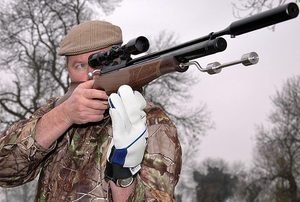
HFT rules have evolved over the years, and competitors can now have a fist firmly on the ground supporting the gun. This can create a rock solid base from which to work, with either a fist on the ground, or a supportive hand inside a target glove.
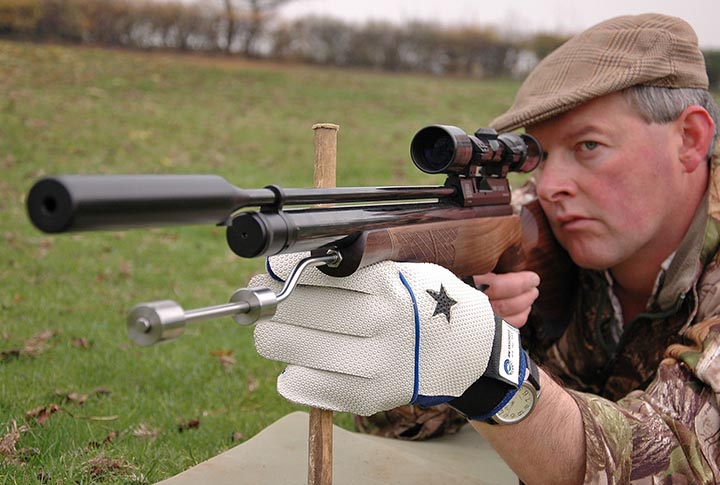
This makes it all sound easy, but of course those pesky course builders often place targets high up in trees, and this may force us to hold the rifle higher up the peg to gain the required degree of elevation.
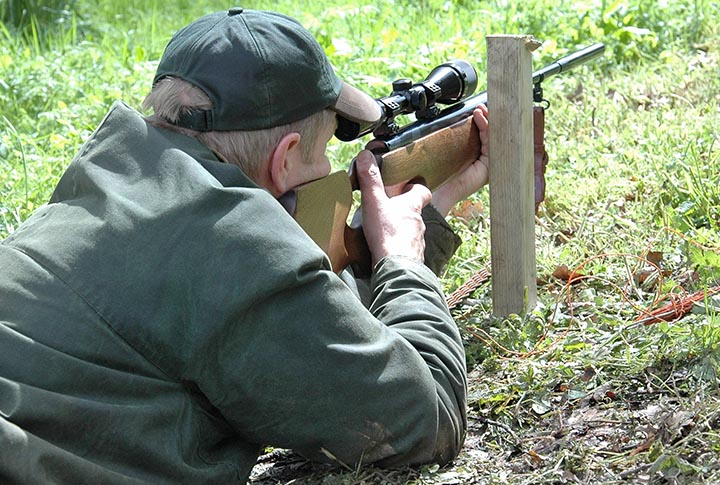
In this scenario, we’ve lost our rock solid stability. However, wrap the fingers round the peg and support the gun in this way, and a steady shot should still be on the cards. If the hand wants to slip, then take the glove off momentarily for that shot. Spend time on the practise range perfecting this grip to suit your body configuration, and it’s time well spent.
Off Set Angle
Another point to consider with prone shooting is the angle at which we lie to the target.
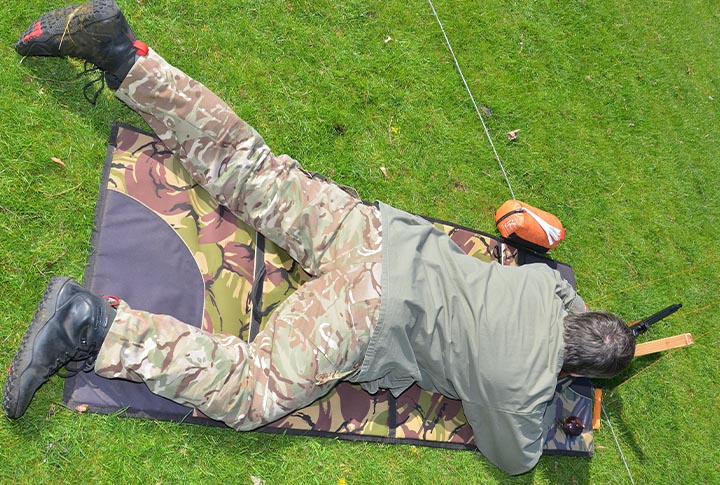
Watch shooters take on prone shots, and they will rarely be lying straight on to the target. In fact most will have their shooting matt and body set off at around 30degrees to the target.
There’s no hard and fast rules here, and it will depend upon the individual, but this angle tends to be how the body wants to naturally lie. A test is to see at what angle the sight picture feels relaxed from. If it doesn’t feel quite right, change the angle until it does.
Off The Peg
HFT used to have a designated ‘off the peg’ shot, where the peg was removed, and replaced by a disc on the floor. The competitor then had to create their own support, rather like a snooker bridge, in order to take the shot, which posed an additional challenge.
The marker discs no longer exist, yet being able to create our own support, means when an awkward shot presents itself, we have the option of creating our own support ‘away from the peg, which can sometimes give us a way round an obstacle. It could be that when a target is viewed through the ‘v’ of tree branches, one branch may prove too close to the pellets flight path for comfort.
With the HFT rule allowing us to just touch the peg with any part of the body, in this scenario, we could lie with our foot touching the peg, yet lie right off to the right, circumnavigating the branches altogether.
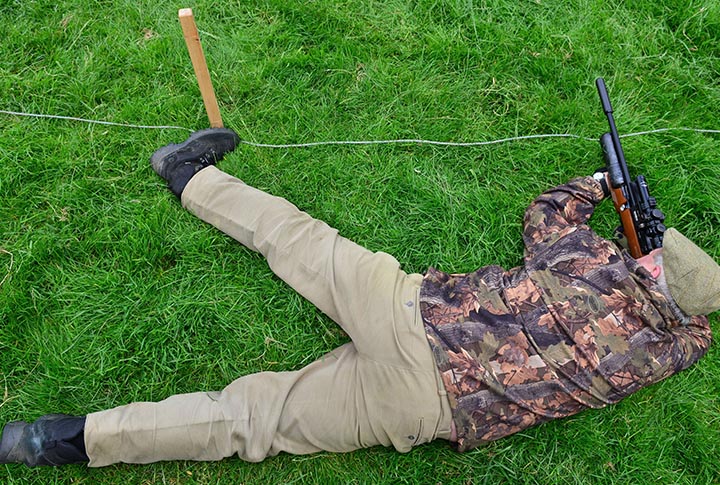
To support the gun here, we form a fingers down position, rather like a ‘bridge’ shot in snooker, and with practise and the use of a target glove, for added finger strength, the results can be very satisfying.
So we’re now organised for those prone shots. In the next blog, well take a look at taking shots from the kneeling and standing positions.
Range & Country