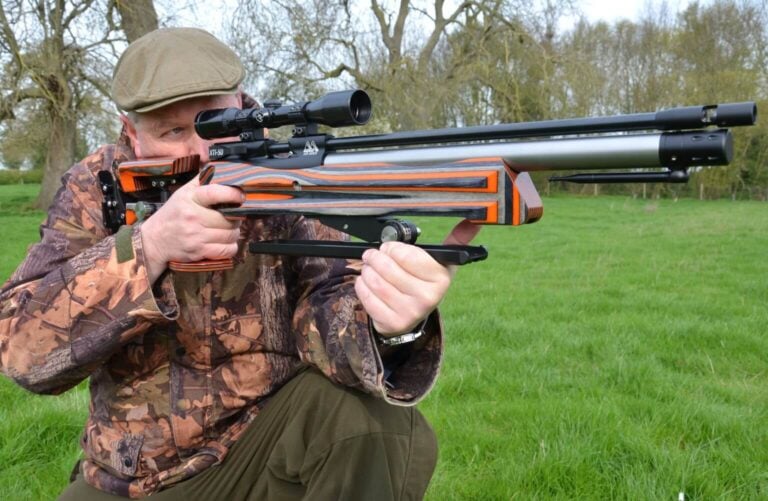
Field Target shooting is widely regarded as the pinnacle of outdoor airgun competition, and with wind and trajectory to contend with out to 55yards, and standing shots at 45yards, it’s not hard to see why. So how did it all begin, and what does it take to get involved? In this blog, we’ll begin to shed light on this great flagship discipline.
In The Beginning
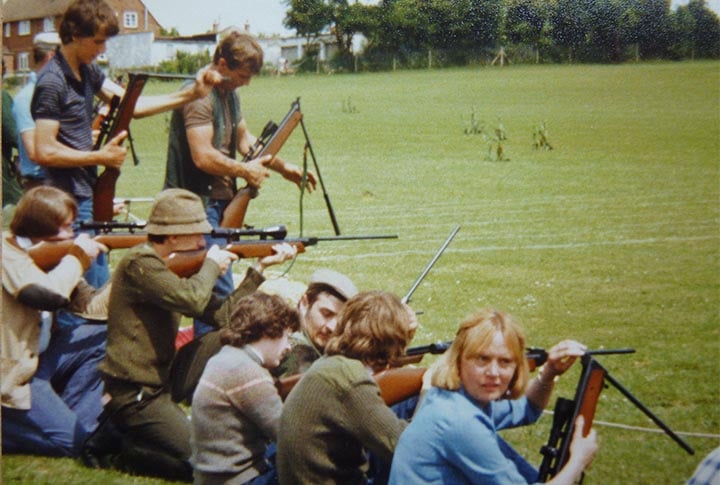
The sport’s origins can be traced to a shoot held way back in 1980, behind the Red Lion pub in Magham Down, Sussex; and this seminal event, organized by Airgun World magazine, Sussex Armoury, and what was then the National Air Rifle and Pistol Association, really did sow the seeds of something special.
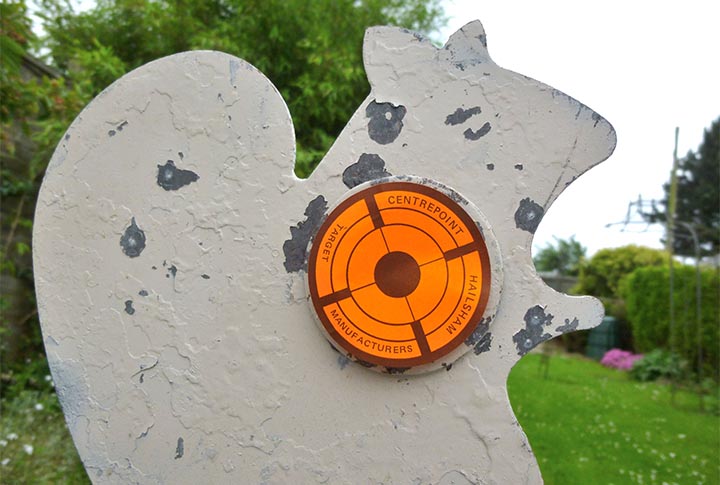
Shooters excitedly gathered to contest for silverware, using a variety of spring powered guns, a smattering of bespoke specials, and even the odd low-powered indoor match rifle! Targets were inanimate steel silhouettes representing airgun quarry, and the competitor had to shoot at a 2inch dayglo sticker stuck on as the ‘kill area’, at distances out to 45yards.
After each lane had taken their shots, the marshal would literally run up to the target to confirm a pellet strike on the sticker, and scores were duly noted. Incredibly basic stuff, but the thrill of just taking part was not lost on those in attendance.
Evolution
A flurry of events followed, hastily arranged to tap into all that initial enthusiasm, and the sport of Field Target shooting was well and truly born. Of course manually checking targets had to change, and the evolution to the knock-down target was set in motion.
Today’s FT competitions are a far cry from that early event, and with at least 45 countries now taking part, it’s become a truly global sport, open to all.
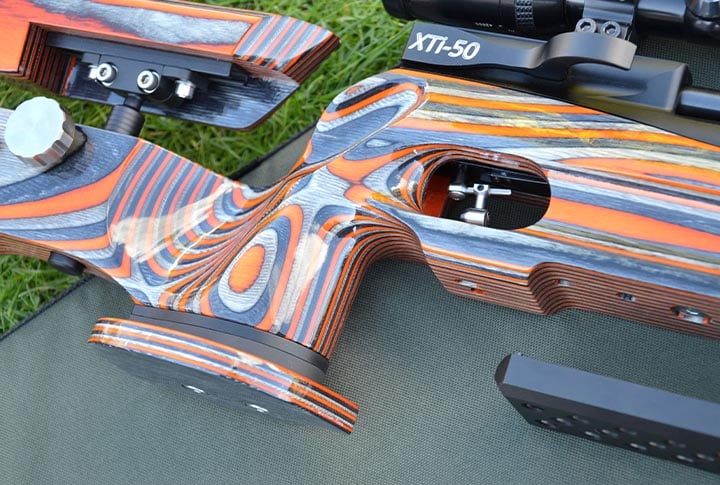
Admittedly hardware has become more sophisticated at the top, but that doesn’t mean we all need full blown match rifles. Indeed one look at an average club shoot, and it’s clear that basic models can be competitive – but that’s a subject in itself for a following blog.
Anyone can compete with any legal sub 12ft/lbs air rifle, and the BFTA (British Field Target Association), operates a grading system, with shooters placed in C, B, A, or the top AA class, according to their ability.
Course of Fire
Field target is much like golf, in that it normally takes place over countryside, whether across fields or through beautiful woodland, and can simply be a nice place to be on a good day, with the sport an added bonus.
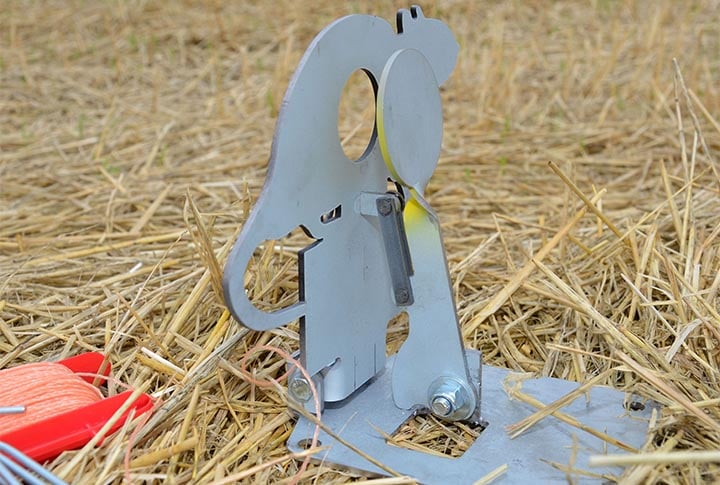
Targets as mentioned, are now the metal silhouette knock-down variety (normally animal shapes), and these feature a collapsing mechanism. They have a small hole cut into the front plate, known as the ‘kill zone’. When the pellet enters the kill zone, the mechanism is triggered, and the target falls. The target is then reset for the next shooter using a linked cord from the firing line (Remington Resetting Target).
Target Kill zones are normally 40mm, occasionally 45mm, and can be placed between 10 and 55yards. However, the rules state that the course can contain reduced size kills, but that they must not exceed 25 percent of the total. 25mm kills can be placed out to 35yds, whilst a maximum of 2x 15mm kills can be set, out to 25yds max.
In the early days, a course of targets varied wildly, but seemed to settle at 25-30. The BFTA’s rules now stipulate that a typical course shall be not less than 25 targets, but can be 30, 40, or 50. In practise, most seem to be around 40, whilst the prestigious Grand Prix events have 50 targets – 25 lanes of 2 targets. What’s termed ‘Discipline’ shots, where the competitor is required to take specific shots either standing or kneeling, make up 20percent of a course, and with these sometimes going out to 45yards, these ultra demanding shots that can be the deciders on the day!
Scoring System
Discipline shots aside, most targets are taken freestyle, and that sees competitors shoot from a stable sitting position, either with the gun across the arm, or supported on the knee. Shooters get one point for hitting the kill, and nothing for hitting the front plate, so it’s fairly ruthless scoring, but exciting.
Unlike HFT, where competitors are not allowed to adjust either the scope or rifle once the tournament has started, in Field Target, competitors can make adjustments to anything along the way, and many shooters take full advantage. With targets out to 55yards, judging distance is a big element of the sport, and a key aspect is that shooters are actually permitted to use specialist parallax adjustable scopes, specifically designed to determine the distance of the target. These have now become a regular sight at shoots and with ultra high magnification at the heart of this technology, large objective, high mag scopes are now very popular across the sport.
In part 2, we’ll elaborate on the range-finding technique and much more.
Join us then, happy shooting!
Range & Country