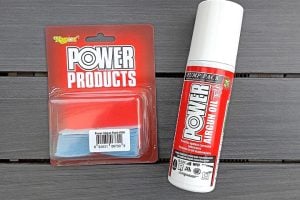
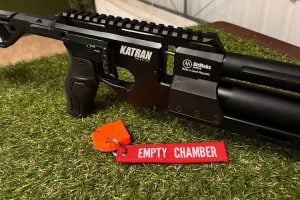
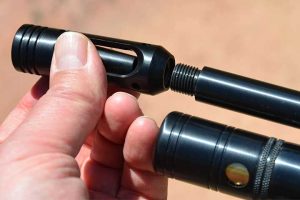
Buy a shotgun and take it out for a session, and you’ll soon realize that regular barrel cleaning to remove the gunpowder residue, is all part of the deal. This build up happens pretty quickly, and a dirty barrel is never conducive to good shooting. However, when it comes to our beloved airguns, there’s obviously no gunpowder involved, so dirt levels are somewhat less all round. So what is the best practice to keep that barrel clean?
In this two-part blog, we aim to clarify the situation, so all will soon become clear. Let’s start with a really basic point though – if the gun in question is shooting well and grouping as expected, then leave well alone. If it isn’t, then it could well be time to take action.
Spring or PCP?
At this stage, it’s important to differentiate between a spring powered airgun, and a pre-charged pneumatic (PCP), and for good reason. Where the traditional spring-piston powered airgun is concerned, these only need very occasional barrel cleaning, when compared to a PCP, for the simple reason that the springers action effectively lubricates the barrel automatically. As the gun fires, the mainspring is released, and as this drives the piston forward, it actually picks up and throws a small amount of grease or oil forwards of the piston head, and this eventually creeps into the barrel, lubricating as it does so.
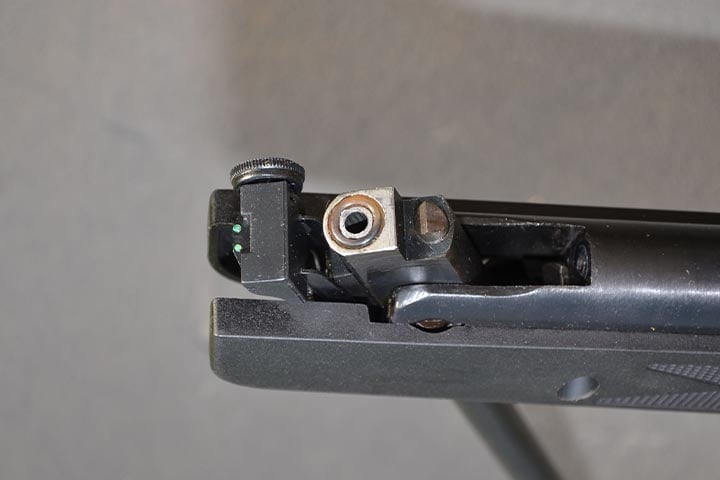
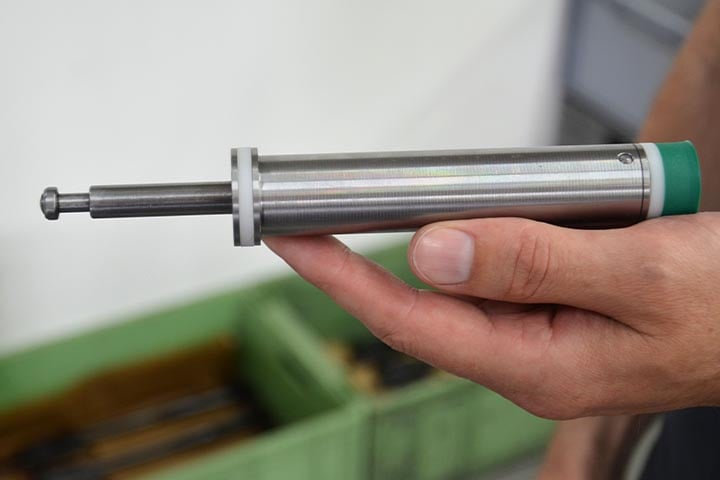
This will happen to a greater or lesser degree, dependent upon how a particular gun is set up. Some highly tuned springers sometimes have very little grease/ oil inside, almost running dry, so here, the barrel may need more attention. But this set-up is rare, and most factory standard springers have plenty of lube flying about.
PCP
Where a PCP is concerned, by definition, the action holds a charge of highly compressed air on board, which is released in a quick pulse for each shot. This air is predominantly dry, and normally taken from a divers bottle, so NO natural lubrication of the barrel takes place here. And it’s for this reason that a PCP’s barrel can foul up with lead, far more quickly.
Pitch of Rifling
Other factors can affect how often a barrel fouls up, and it can be quite surprising how one example, of exactly the same model, can vary against another. One gun’s barrel may need a clean after just a hundred or so shots, and another example of the same rifle can go several hundred shots. This can be due to the pitch and depth of the rifling (the spiral/ corkscrew pattern), which is cut into the inside of the barrel. It’s the rifling which imparts the spin onto the projectile, but if this is quite shallow, then it may result in a barrel which stays clean for far longer.
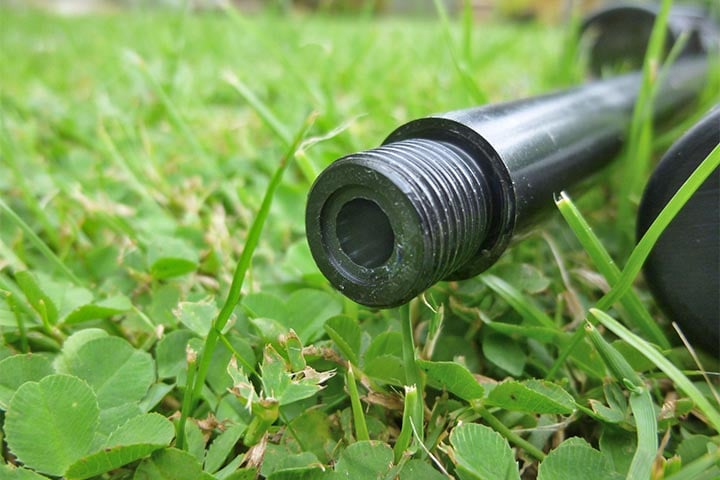
The rifling process cuts ‘grooves’ into the inside of the barrel, and the high points left are the ‘lands’. Higher lands – (effectively a tighter barrel), may result in the pellet getting fractionally shaved as it passes through, and it’s this ‘fouling’ – lead deposit which accumulates as a build up over time. And a deterioration in accuracy can be the result.
Level of Seriousness
With the idiosyncrasies of airguns, it can be that a particular gun with a tight barrel, shoots incredibly accurately, but will need cleaning that bit more often; and for some competition shooters, that’s a price worth paying. That makes this the perfect time to point out that barrel cleaning is obviously all about pushing to maximize accuracy, and down range performance, and this is only relevant to those of us that care enough to go that extra mile. Many shooters are quite happy to shoot informally, purely for fun – and if that’s you, and you don’t want the fuss of barrel cleaning, then don’t feel pressurized.
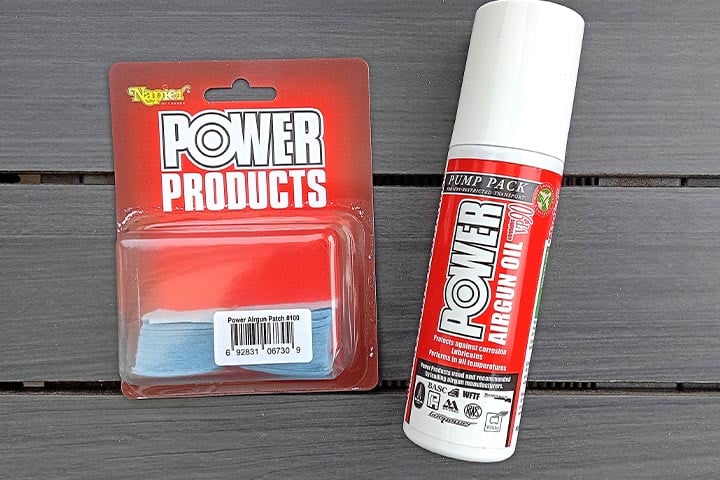
However, if you’ve read this far, you probably fall into the camp which gets miffed when the gun stops shooting super tight groups; and it’s at this point that a barrel cleaning session could well be the answer, to get everything back on track. Where PCP’s are concerned, many shooters who participate in serious competition, be that Field Target shooting, HFT or Benchrest, will probably clean their gun’s barrel every few hundred shots, and it can help accuracy and fight corrosion at the same time, if a lube is used.
If it Ain’t Broke….
As we started though, that classic adage, ‘if it ain’t broke, leave well alone’ does still hold true, and if a particular gun is ticking over and grouping as expected, then that’s all you want. Don’t rush to play for the sake of it; and as mentioned, most springers should shoot well with little intervention. Some guns just prove to be a little awkward, and a long term owner will learn to detect when the time has come for some intervention.
In short, when accuracy has dropped off, and groups have opened up a bit, that’s the time to grab the barrel cleaning kit. So we’ve established when a barrel clean may be necessary. In Part 2 of this blog, we’ll cover the methods used to get the job done.
Until then, happy shooting!
Range & Country