So we’ve established that a pellet’s head size is important, and governs how it mates with the barrel’s rifling. Most quality pellet brands, if they state head size at all, tend to specify 4.52 as a popular average size where .177 calibre is concerned. The smaller 4.51 is often available for use in guns with a tight barrel, and sometimes 4.53 is available, which can be great to experiment with, in a rifle with a looser fit at the breech.
However, we’ve also established that we can’t always rely upon stated sizes to be correct; so sizing pellets can make sense.
The Sizing Process
In the early days of Field Target shooting someone realized that original BIC biro pen clear plastic tubes were ideal for sorting pellets by head size. Drop a pellet into the tube and it will drop to a certain depth. Most pellets should drop to the same depth and this can be marked off. Any other pellets can then be dropped and their depth compared. Super loose pellets will drop further and vice versa. Later BIC’s aren’t quite so user friendly (how inconsiderate of them!), but dedicated pellet gauges are now available.
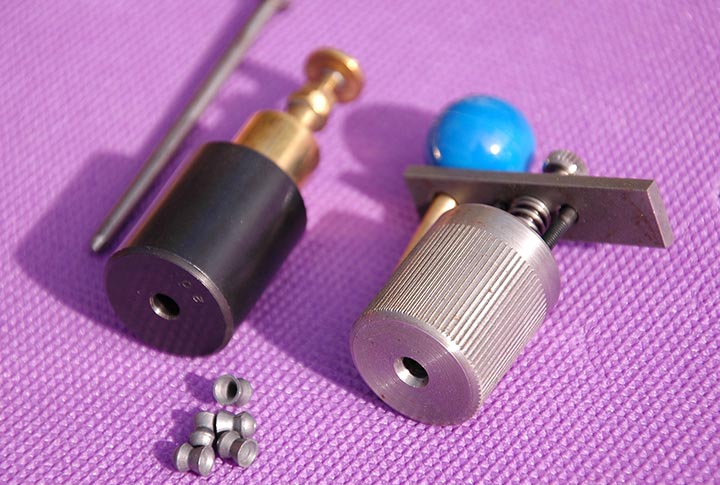
The ‘Pellet Gage’, made in the USA, is a slick little device, and this takes the form of a small plate with a series of precision drilled holes. These are marked up with measurements that relate to the pellet head size measured in millimetres, and each one is a one hundredth of a millimetre larger than the previous hole.
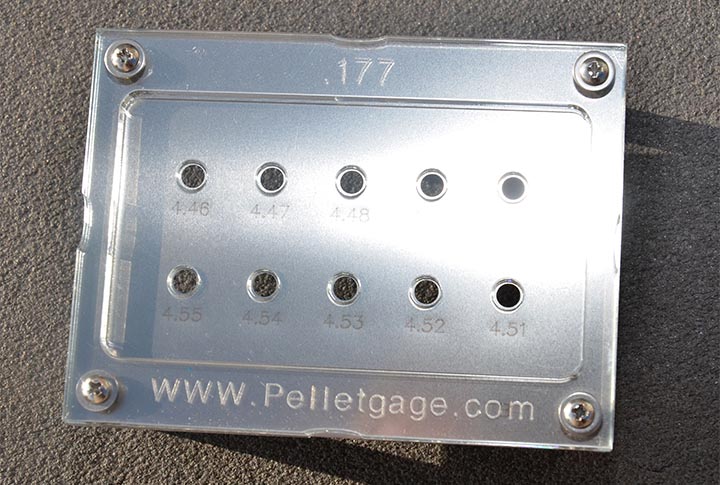
The idea is to gently offer up the pellet and see if it will push through the hole or not. Keep moving to a larger hole, and when it does, you know the head size. This system allows for head sizes from 4.46mm through to 4.55mm, and sort accordingly. Bear in mind that .177 is officially 4.5mm, and we have some usable leeway to play with.
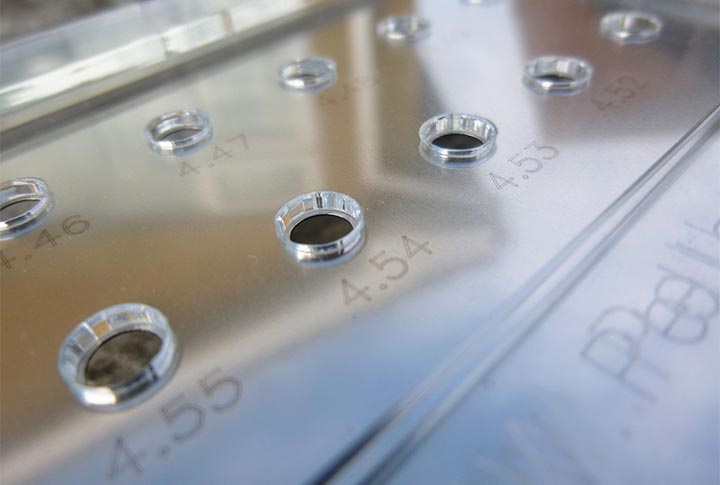
The ‘Pellet Gage’ can also be supplied for .177, .20, .22, .25, .30, and even .35 calibres. Alternative pellet sizing devices can be used, and these can sometimes be adjusted, so that when a pellet is passed through, the head is sized to a specific dimension as desired.
Pellet Lubrication
So we’ve washed, weighed, and possibly sized our pellets. It can also be beneficial to lightly lubricate pellets, which can mean less friction, so they don’t foul in the barrel so much. The down side, with certain official pellet lubes which have been developed in the past, is that there can be a residue build up in the barrel, which can in itself have a detrimental affect on accuracy.
Used sparingly though, a fine film of an appropriate lube can aid accuracy, and there’s an added bonus of lubricating pellets, in that a fine film of oil ever present in the barrel, will protect against corrosion.
Pellets with a higher antimony content in the lead mix, are normally shinier and also slightly harder, and these will benefit from lubing, in that they will be less prone to fouling.
Lubing Process
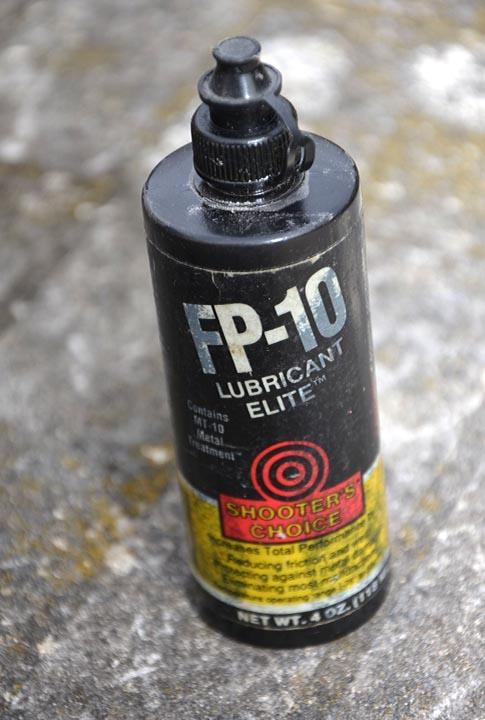
For the lubing process, we first need a suitable high quality gun lube. FP10 is perfect for the task, as is Napier Power Pellet Lube.
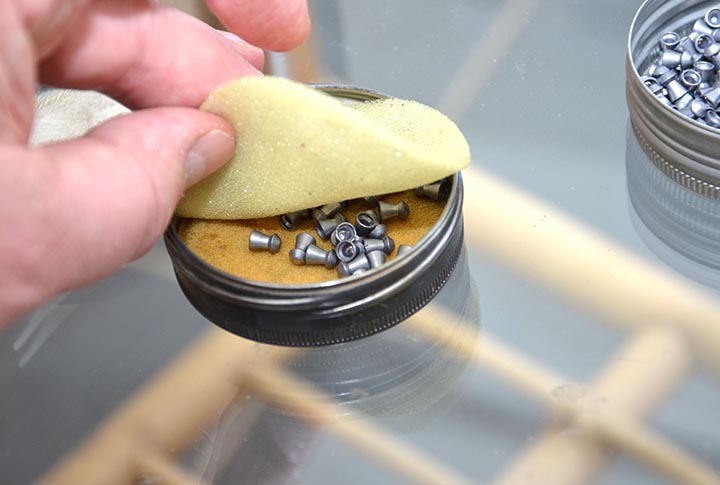
It’s more thorough to lubricate smaller batches of pellets, so with an empty pellet tin, first pour a few drops of oil over the thin disc of foam in the bottom of the tin, place around thirty pellets into the tin.
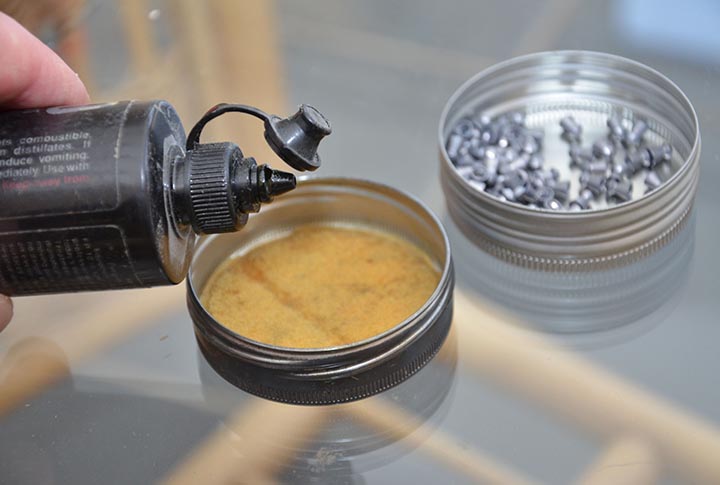
Place another lubricated disc of foam on top, close the lid and gently roll the pellets around, turning the tin upside down and repeating. Take off the lid and gently press the oily foam down, just making sure all pellets have a thin film. Repeat the process with new batches of pellets until the task is complete. There should now be a fine coating on each pellet without excess oil present.
The Plan Going Forward.
The plan from here? Well fine testing down on the range is the only way for proper evaluation, as to what a particular gun likes, and whether any of these processes – pellet weighing, sizing, or lubing, makes any discernable difference. If results are noticeably better however, then it could make sense just to weigh and prepare say 60 pellets for a tournament, or hunting foray, just for peace of mind, and keep these in a special container.
Of course quality pellets may just shoot really well from the start, and prove super consistent whenever a sample is weighed. If that’s the scenario, you’re lucky, no further action required. Peace of mind and confidence is the key here though, and just knowing a thorough pellet preparation routine has been carried out, can be worth a target or two, which can after all, be all that separates the winners from those that also entered.
Enjoy the process, and it’s time well spent!
Range & Country