Outdoor airgun competition shooting can be traced back to that original shoot down in Sussex in 1980 – a real all-comers event, with shooters using indoor target guns alongside springers with open sights. A simple format was the order of the day, but the seeds were sown for what was to follow. Field Target was up and running, but as the level of sophistication of the kit used, began to grow, so the sport transformed. It’s still a great discipline, and arguably the flagship outdoor airgun sport, but with exponents using full blown match rifles and high magnification range-finding scopes, it now feels very different from those simple early events from which it emerged.
HFT
And so we come to Hunter Field Target Shooting or HFT – a form of outdoor competition designed to be more simple and instinctive, and very much along the lines of those early shoots. Indeed it’s great to have the two distinctively different sports now running alongside – FT where you can use range-finding scopes, and HFT where you can’t. But there is so much more to it than that, so in this blog, the aim is to explain HFT, and shine a light on why it’s proving so popular.
Course Layout
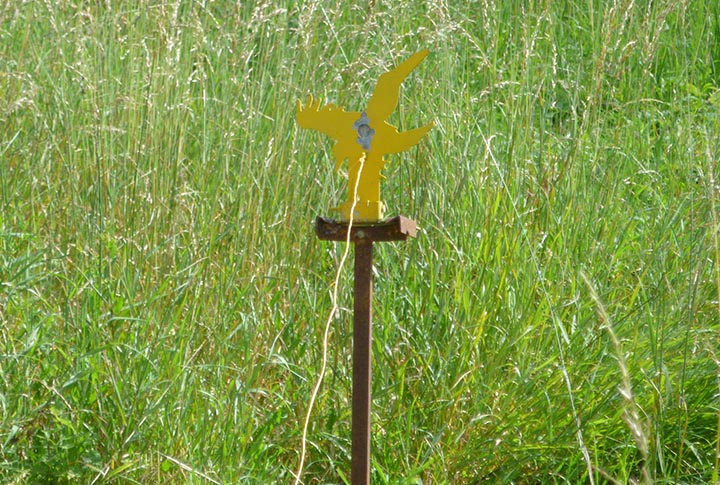
A typical course will consist of 30 metal animal shaped knock-down targets, and the competitor will move through the course, normally a wood or field, taking one shot at each – with one target per lane. Shooters shoot through in pairs or three shooters, and score each others cards. The target has a small hole of varying size cut into the front plate, with one point awarded for hitting the plate, and two if the pellet passes through the hole (kill zone), causing the target to collapse.
Targets are set at distances between 8yards and 45yards, (ten yards shorter than FT) and rules dictate what size kill areas can be laid at specific distances. The smallest kill area is 15mm, and these can be laid out to a maximum of 25yards – challenging enough, especially in breezy conditions. Kill zones can be up to 45mm in the rules, but in practice, 40mm is more likely.
Positions
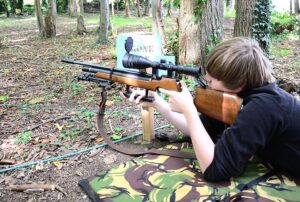
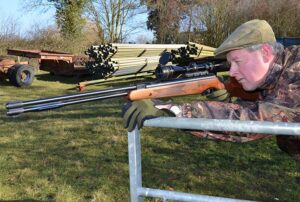
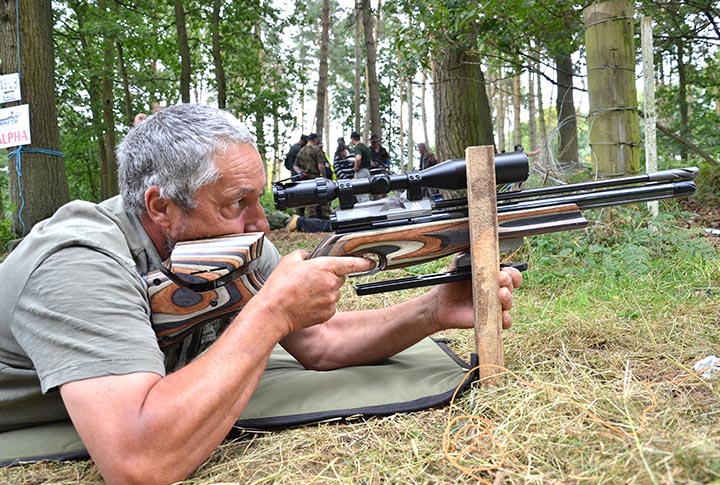
A key rule in HFT requires the competitor to touch what’s termed the ‘peg’ whilst taking the shot, normally a wooden stake in the ground, then move on to the next lane. Unlike Field Target, where shooters can and normally do sit, HFT doesn’t allow this, so most freestyle shots will be taken from the prone position. Sometimes a tree or object can be designated as the peg, so it pays to practise shooting from this type of rest too.
Some lanes are designated compulsory kneeling or standing, and these are often the hardest shots. Working through the 30 targets can take the best part of three hours, but in good weather, it’s just a nice place to be.
Generous
Unlike the ruthless scoring of FT (one point or nothing), with HFT rewarding the shooter with that one point for just hitting the target plate, it makes a big difference, ensuring that most shooters will score at least 50percent – 30points ex 60 on a 30 target course. Encouraging for newcomers and juniors, and a key rule that works well.
No Touch Rule
Another key rule in HFT is that the shooter is not allowed to change the setting of either the gun or the scope, for the duration of the match; meaning the range-finding scopes of FT are totally useless for HFT, due to their shallow field of view.
The aim is to arrive at a scope spec where all targets have an acceptable level of clarity without adjustment; so an ideal magnification for HFT is between 7x and 10x, with parallax (if present) set on around 25yds. Compromise is the name of the game, accepting that an ultra close target placed at the minimum 8yds, may well be blurred….. but shootable.
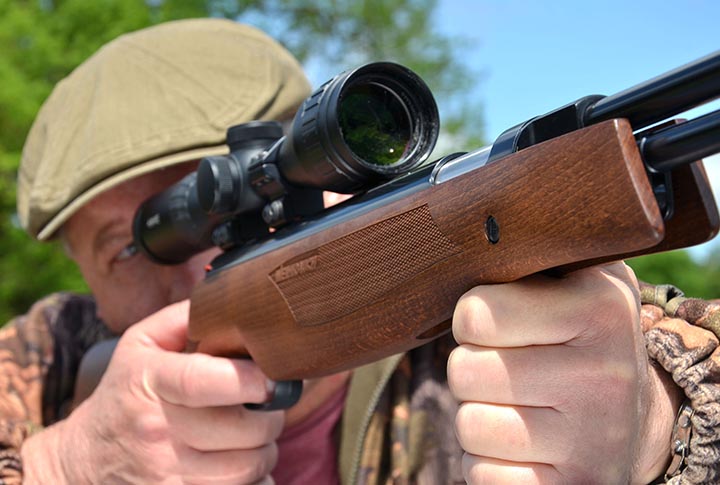
Many competitors favour a scope with a reticle which can provide plenty of reference points, and Mil Dot reticles are increasingly popular for good reason.
Class Act
Another great leveller in HFT is that shooters choose which class they wish to shoot in, and effectively it acts as a handicap system. If you are a junior for example, 9-16years old, you will only shoot against other juniors. Likewise ladies and veterans.
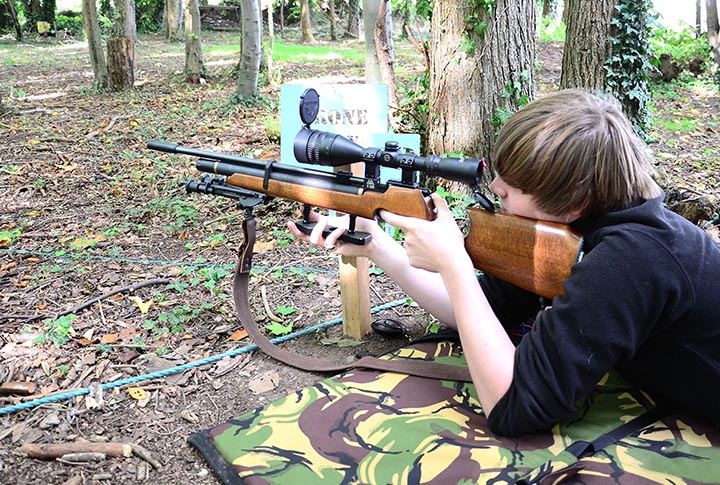
A recent development has been the Stick class, where shooters are allowed to rest the gun on a tripod or similar device, and it has proved very popular.
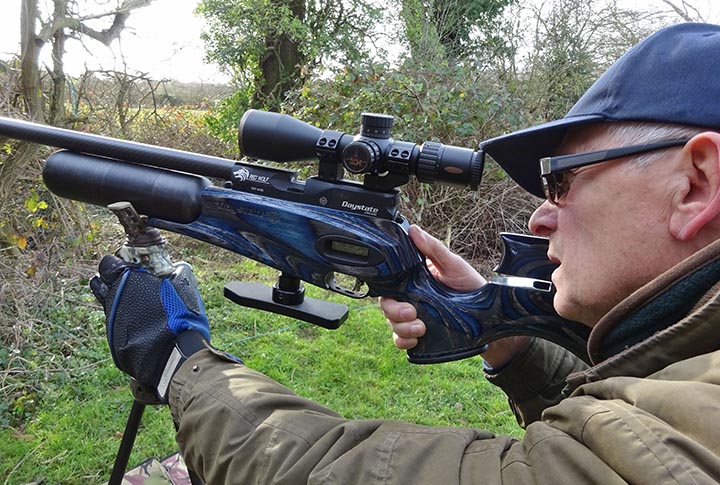
Classes are as follows:
- Open League (anyone can opt to shoot in this)
- Veteran Class (open to anyone 60 years and over.
- Juniors 9 -16
- Ladies Class
- .22 Calibre (PCP’s and semi-recoiling .22 or .25 calibre)
- Recoiling Class – all recoiling rifles irrespective of calibre
- Sticks
- Club Team
Footnote
Formalized and introduced as a national series of competitions in 2003, largely due to the hard work of Pete Sparkes, the sport has now really taken off, with the United Kingdom Air rifle Hunter Field Target Association national league of events, World and European championships, and a plethora of smaller events around the country at club level. So why not take the plunge and give it a go. A whole world of challenge and fun awaits!
For pre-booking forms and downloads regarding UKAHFT events (where bookings are possible), and all the latest information on anything connected with HFT, take a look at the following websites:
www.ukahft.org www.shooting-the-breeze.com www.whfta.org
Get out there and try a local competition
Happy shooting!