Pre-charged pneumatics are incredibly popular, due in no small part to the fact they are far easier to shoot than spring-powered guns. However, unlike spring guns where high pressure is generated at the split second the gun fires, PCP’s carry around their high pressure air tank; and as such, care needs to be taken. So in this blog, we’ll cover ‘best practise’, where handling PCP’s are concerned, as well as the charging process involved.
Charging Gear
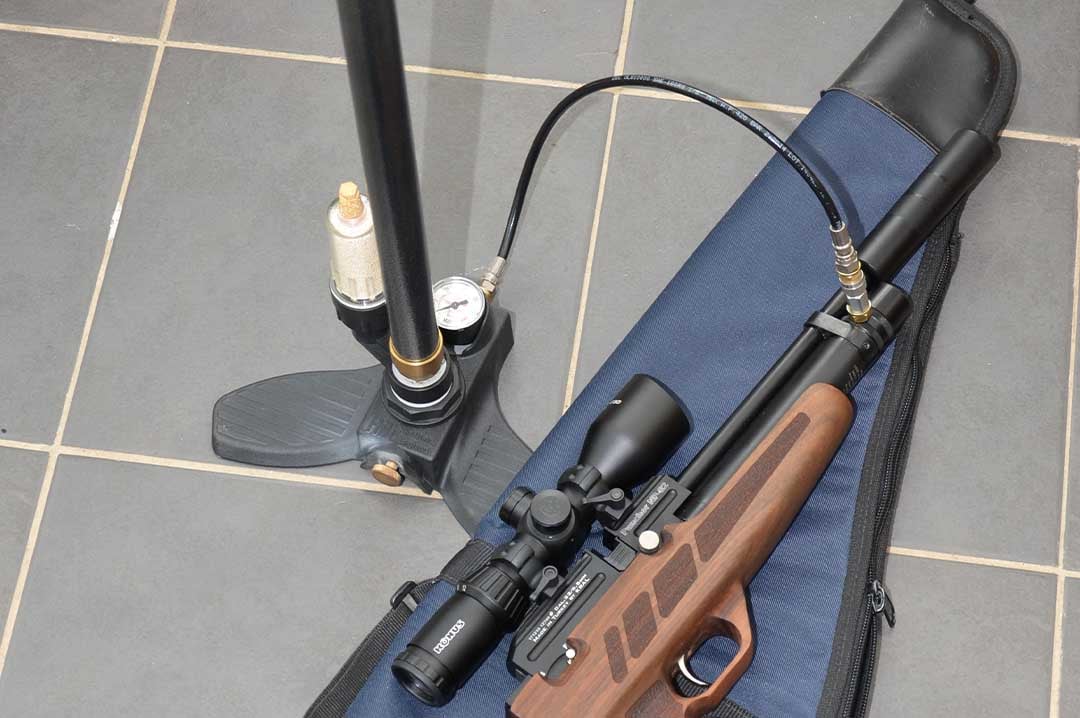
PCP’s need charging gear of some sort, and whether that’s a pump or divers bottle, can depend on the gun itself. A rifle fitted with a large high pressure buddy bottle for example would require too much physical effort from a pump, but for more slimline models, a pump could well suffice. Purchasing an air compressor is of course a further option, bringing full independence. Either way, care needs to be taken with the filling process; so adhering to some safety rules makes sense.
Storage
Consider that many of our diving bottles carry extremely high pressure, often filled to 300bar (4351psi), then it’s imperative they are kept firstly out of the way from children, and secondly stored in a sensible safe place, away from excess heat.
Air-line Threads
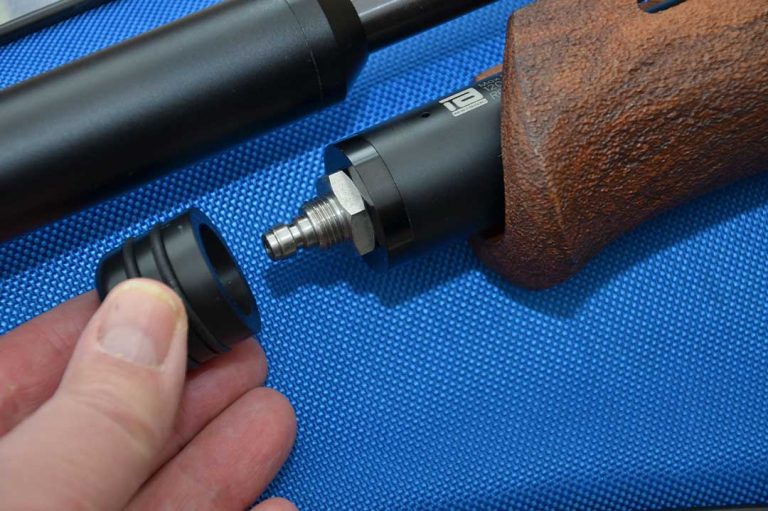
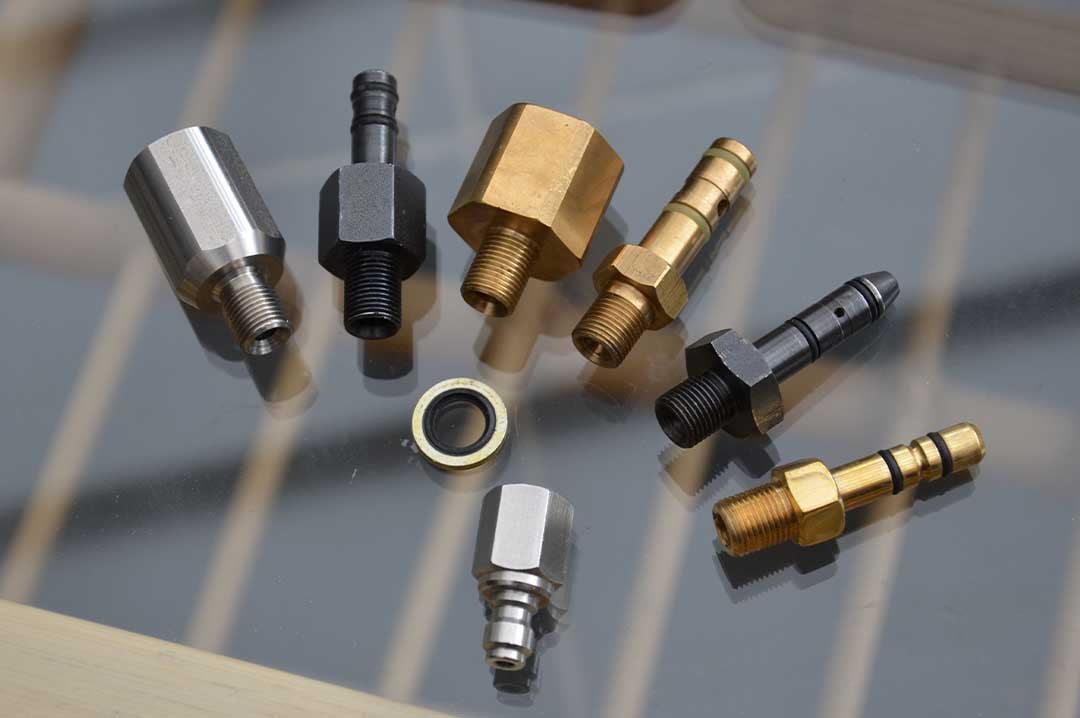
The charging process involves connecting the gun to an airline from the bottle or pump, and most manufacturers supply a small adaptor which needs to be attached to the airline. However, many manufacturers use their own design of adaptor, which makes things awkward for anyone who owns several makes of rifle.
Constantly unscrewing threads and fittings is asking for trouble, but the answer is to purchase a ‘Best Fittings’ ‘Quick Coupling kit. This involves screwing each adaptor into a quick coupler end, and everything thereafter becomes a snap-fit, into the Foster style female end of the airline.
Seals & Probes
When charging, we need a perfect seal, and that means avoid being ham-fisted overtightening airline joints. A subtle approach pays dividends, so initially hand tighten fittings to the airline, then use a spanner to gently nip up. Some adaptors are designed to be a metal to metal fit, but remember to use a doughty seal when it’s called for (effectively a high pressure ‘o’ ring), between joints, for a perfect seal.
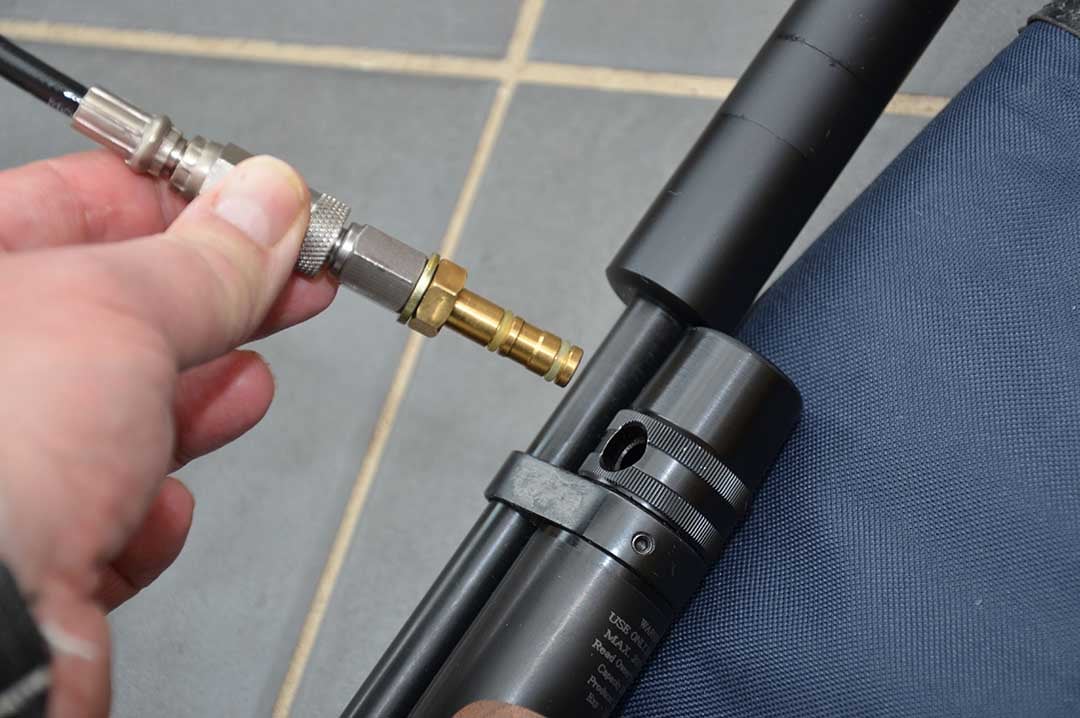
For airguns that rely on the push probe system, it’s good practise to check that the probe adaptor is still fully inserted shortly into the charging process. All we are doing here is ensuring the push fit probe can’t fly out under pressure, due to being only part inserted. A basic check but worthwhile.
Nice & Slow
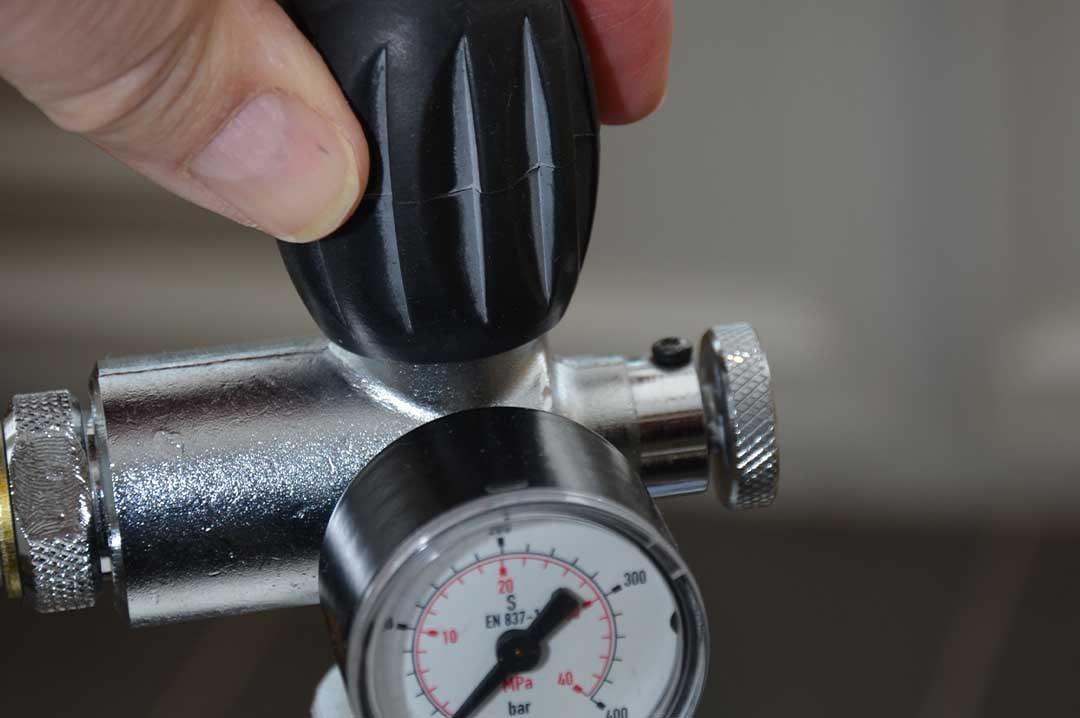
When charging a PCP, it pays to charge slowly, which keeps the air cooler for a more accurate air fill. Many bottles now come fitted with a deliberately slow bleed line, to prevent filling too quickly, which is a great feature.
Pressure – Regulated Action
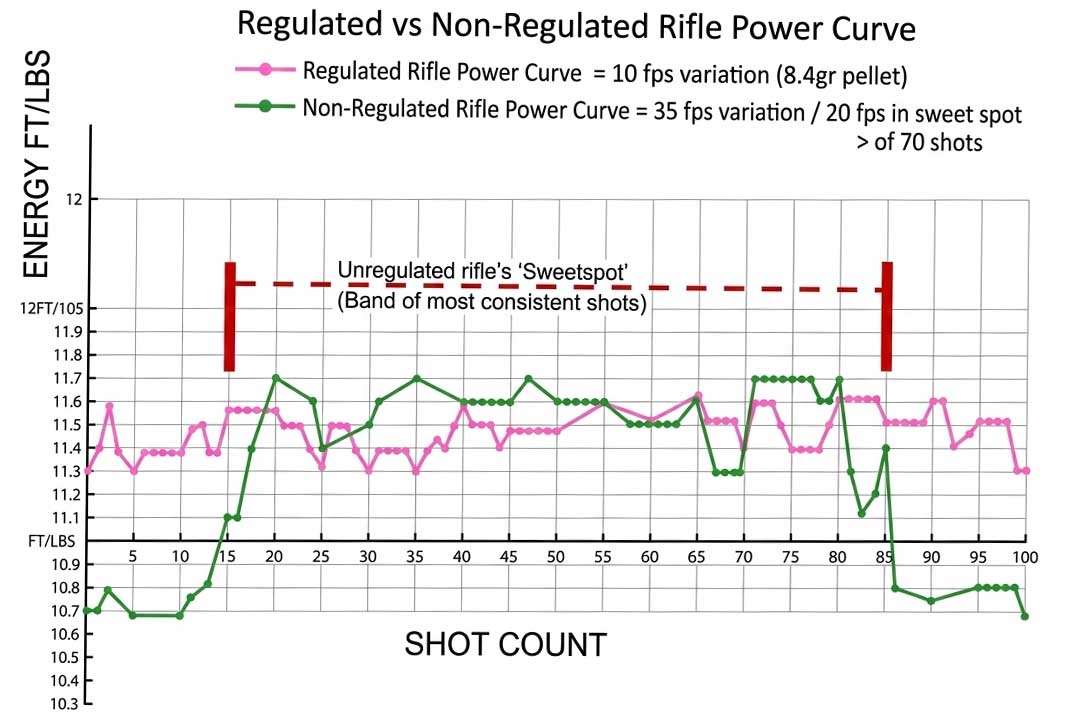
Modern PCP’s are safety tested with higher pressures than required, but it’s still vital we stick to the prescribed fill pressure. There are however, other considerations regarding fill pressure. Many more sophisticated airguns now come fitted with regulators, which are small precision devices that meter the air for each shot. This gives a more consistent velocity, but another big benefit is that the pressure to which the gun is charged, becomes less critical. Regulators typically operate between 70-100bar, so as long as there is at least that pressure remaining in the gun, then consistent performance should be possible.
Pressure – Non-Regulated Action
Most non-regulated airguns utilize what’s termed a ‘knock-open valve’ and this uses a main cylinder charged to a specific pressure. A small hammer knocks open the valve and releases a pulse of air for each shot. But as the pressure slowly falls in the main cylinder, it becomes easier for the hammer to open the valve, so more air gets through each time. This sort of airgun effectively produces a power curve, where we may well get some lower powered shots at the start, then a run of more consistent shots, then some much lower velocities towards the end of the charge. For HFT/FT competitors, and hunters who want to maximize performance, the ideal is knowing where that band of consistent shots lie (sometimes known as the ‘sweetspot’ ). In this scenario, monitoring a rifle’s shot cycle in conjunction with a chronograph, can really pay dividends.
Indeed, the super successful unregulated Air Arms S400 is a perfect example. Air Arms still specify a fill pressure of 190bar, and this will give the maximum number of shots. Yet fill to 170bar, and you’ll see a more consistent band of shots from the outset.
General PCP Safety
One final word on safety. PCP airguns can often be super quiet, especially when fitted with a silencer, and it’s easy to become blasé and forget their power output. So remember the safety rules of shooting at all times. Likewise, where DIY is concerned, working on PCP’s poses its own problems, given the ultra high pressures contained within. Manufacturers often give guidelines on bleeding the system, but if at all unsure, leave any project to a competent gunsmith.
Hopefully that’s some more light shed on the subject.
Happy shooting and enjoy your sport.
Range & Country