So what type of air rifle should You buy? Spring Power, Gas-Ram, CO2 or PCP ?
Confused? Well it’s totally understandable. With such an incredible array of airguns available these days, and so many different types, choosing which one is right for you needs some careful thought. So this month, we thought we’d guide you through some options, and hopefully by the end of this blog, you’ll be nearer to making an informed decision.
Spring Power
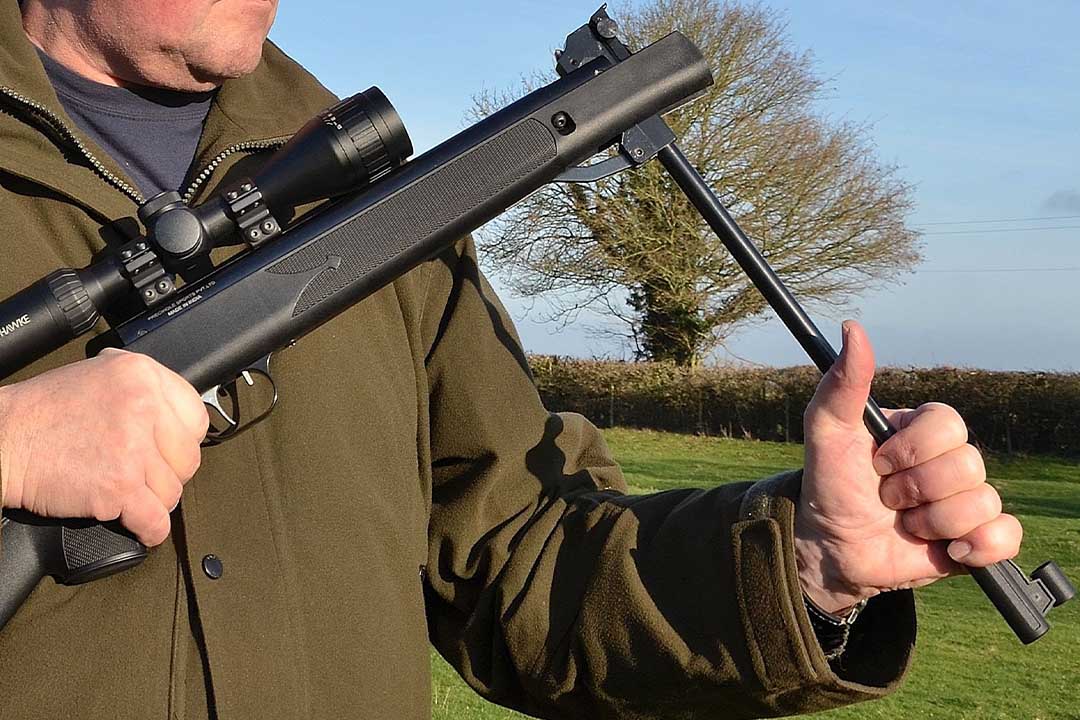
We are basically talking power sources here, and unlike a live firearm, where the power is in the cartridge, airguns hold or generate their own power. The most popular by far is the traditional spring powered models, and the time-honoured break-barrel still accounts for more airgun sales across the board than any other. Here, the barrel is pulled down to open the breech, then all the way down through the cocking stroke, which compresses a large mainspring which powers the piston. The pellet is pushed into the lip of the barrel, then the barrel is lifted back up to close the breech. These guns are often lightweight and with that large spring expanding as they fire, there is normally plenty of felt recoil. They are slightly harder to shoot because of the recoil, but they can be fun and instinctive. Quality varies across the price bands, and you do largely get what you pay for.
Pros: Ease of use, relative lightweight, self-contained power
Cons: Recoil, cocking effort
Fixed barrel models are operated either by a side-lever, or more commonly an under-lever, and whilst this adds significant weight, the fixed barrel can be more accurate, when compared to a break barrel and feel more robust over time. The best quality examples are still incredibly accurate, but do require more input and technique from the shooter, when compared to a PCP for example.
Pros: Fixed barrel accuracy, self-contained power
Cons: Increased weight, cocking effort
CO2
CO2 is an interesting power source in airguns, and these rely on a capsule of CO2 (Carbon Dioxide), to power the system. Some rifles may need 2x a standard 12g capsule, and some utilize the larger 88g CO2 cylinder which means more shots per charge. A standard 12g CO2 capsule normally costs 50p- £1 and can be bought in bulk, whilst the larger 88g capsules area good few pounds more, so running costs need to be factored in here. Co2 rifles are recoilless in operation and tend to be lighter, since there is no heavy spring and piston inside. However, they do tend to be cheaper models, aimed at the budget end of the market. Some are designed to shoot BB’s and some pellets, but it’s worth remembering that BB’s are far less accurate, and have a propensity for dodgy ricochets! Take that route, and we would definitely recommend using safety glasses.
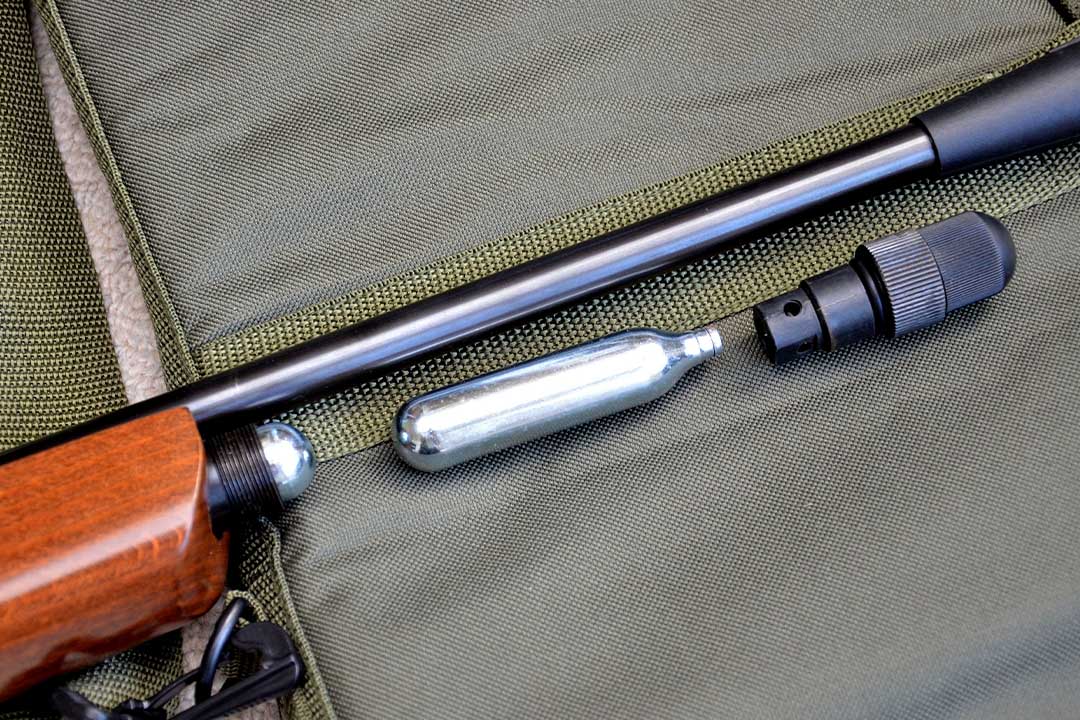
Inserting a new CO2 cartridge into the gun is straight forward, and you’ll probably hear a small hiss as the capsule is pierced, and the gas pressurizes the system. However, care needs to be taken when removing a cartridge at the end of the cycle, as it can become ice cold if removed prematurely. Another characteristic with co2 power, is that velocity and shot count will go down when shooting in cold temperatures.
Pros: Recoilless, can be very light, potential for fast-fire shots, no cocking effort
Cons: Reliant on CO2 capsules, power can fluctuate
Gas-Ram
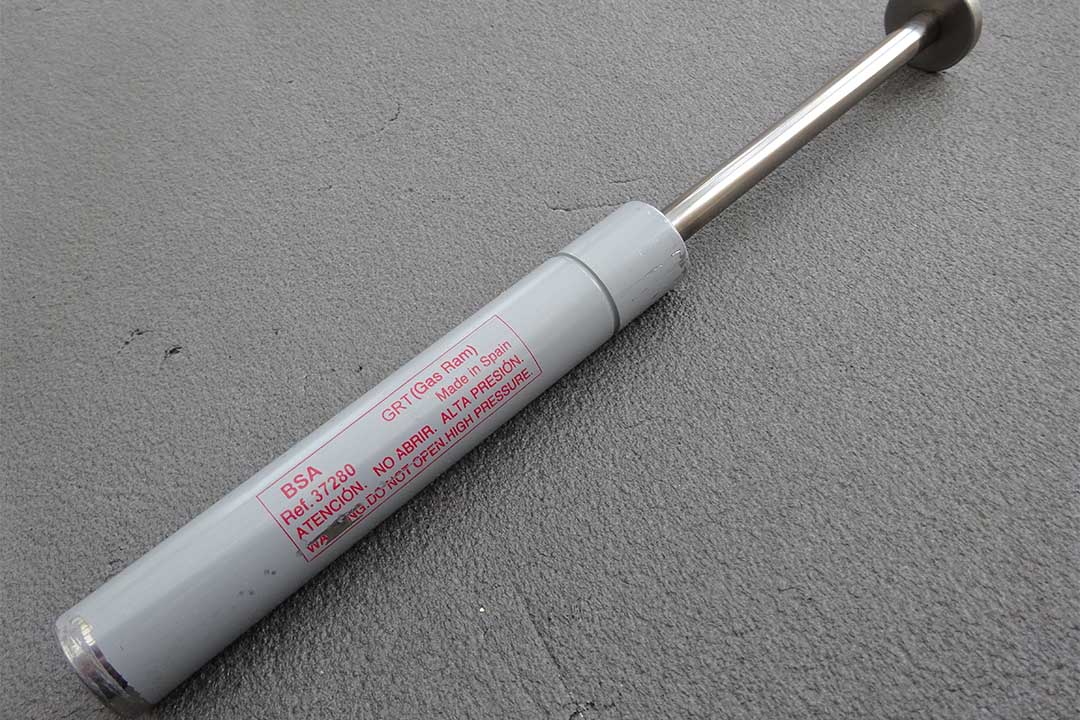
It was Theoben in the early ’80’s that came up with the idea of replacing a conventional mainspring with a gas-ram. The gas-ram incorporates a sealed chamber of gas or air, and when the barrel (or under-lever) is brought down to cock the gun, the chamber of gas is compressed. As the trigger is pulled to release the piston, the gas rapidly expands, driving the piston forwards, which in turn, compresses the air in front of it to power the pellet. The gas never leaves the gun, so power is self contained. This system has been much copied with the theory being that the lock-time (the time it takes between the trigger being pulled and the pellet exiting the barrel) is quicker than a conventional springer. In practice, some cheaper models can have a harsher feel, so the benefits are debatable.
Pros: Self contained power, quick lock-time
Cons: Can be a little harsh compared to a springer, cocking effort
PCP
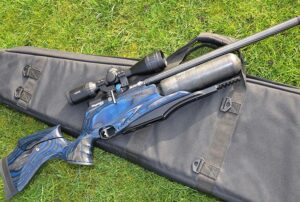
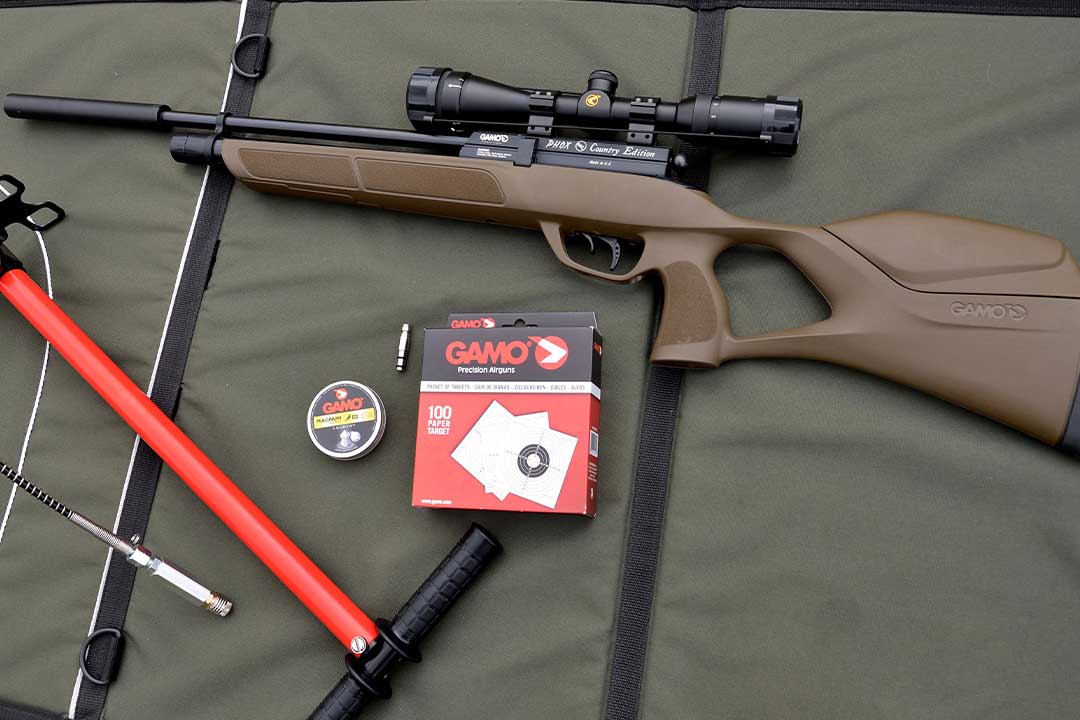
Last but not least is the Pre-charged Pneumatic (PCP). This type of airgun has just soared in popularity over the last few decades, and as with everything, there are pros and cons. They are near recoilless, so are much easier to shoot, and models exist in all price sectors; from cheap and cheerful budget guns, right through to sophisticated competition rifles, with price tags to match.
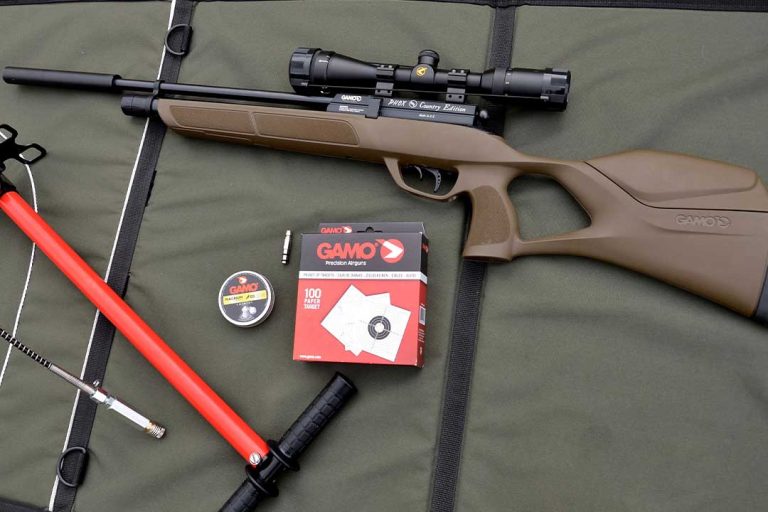
The down side to some is that PCP’s need to be charged up before the shooting starts, but once charged, you just need to pull back an effortless bolt or small side-lever to load a pellet. Many guns are good for several hundred shots before a recharge is necessary. As for the charging gear, this can be either a dedicated airgun hand pump (to stay independent), or a divers bottle. Take the latter route, and bottles need to be either filled by a home compressor, or taken to a divers shop, where they will be safety tested periodically.
Pros: Recoilless, available across all price points to suit
Cons: Reliant upon external power- bottle or pump
Overview:
So we hope that helps. As usual, our first question would be ‘what do you want to do with the gun; is it intended as a starter model, for hunting, or competition?’ and how much do you want to spend?
Either way, we can help you every step of the way, so come and have a chat.
Range & Country